01
ZhangYvJing's
Daily Brief
00
Film / Book Chapter
Ikiru
Ikiru (1952) · Akira Kurosawa
This model is unavailable for free. The paid version is available now - use this slug instead: openai/gpt-oss-120b
A Philosophy of Software Design
A Philosophy of Software Design · John Ousterhout
Chapter 2: The Nature of Complexity
A high-value chapter when refactoring or agent workflows feel messy: it names complexity as the thing to manage, not merely lines of code.
01
Insight
03
Hacker News
02
03
04
05
06
07
08
09
10
04
YouTube
01

Katelyn Lesse and Angela Jiang lead the team building Anthropic's developer platform - the layer that both outside builders and Anthropic's own products run on top of. Angela frames the platform as a three-layer stack: knowledge, execution, and coordination. She argues the real leverage is what’s at the top: "strategies," or meta-harnesses that give each token a different job, from advising to executing to reflecting to memory. On the question of open ecosystem vs. walled garden, they say they aren't precious about owning the stack. Katelyn points to Anthropic's self-hosted sandboxes with part
02

For his closing keynote, Addy Osmani explores the evolving role of software engineers in the age of AI agents. He argues that as coding tasks become increasingly automated, the true value of an engineer shifts from mere code production to accountability, judgment, and system ownership. https://addyosmani.com/ https://x.com/addyosmani/status/2074927530482835916 Timestamps 0:00 Introduction and the human side of engineering 1:46 Rebundling roles and ownership of systems 2:34 Harnesses, loop engineering, and software factories 3:34 The shift to answerability as an engineering requirement 4:26
03
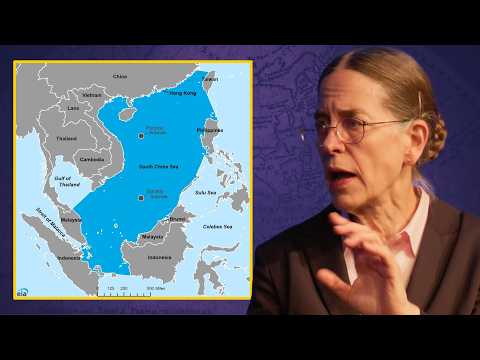
Full episode: https://www.youtube.com/watch?v=OS1NZLgKM2c Me on twitter: https://x.com/dwarkesh_sp
04

There are thousands of agent skills. Almost none of them are tested. They get vibe-checked with two manual runs, maybe a thumbs-up from a colleague, then shipped. You wouldn't merge code without tests — so why are we shipping skills without evals? This talk covers the full lifecycle of building reliable agent skills: what a skill actually is (and isn't), how to write one that triggers correctly, and how to build a lightweight eval harness that catches failures before your users do. ### Philipp Schmid Staff Engineer · Google DeepMind [X/Twitter](https://x.com/_philschmid) · [LinkedIn](https://
05

In the last two years, models have gotten exponentially smarter. Two years ago they couldn't pass the bar. Today, top 1% of test scorers. And yet most agents still can't answer a simple business question correctly. You ship a demo that works. You deploy it. The business abandons it in a month. The missing variable is context: the business definitions, procedural knowledge, and operational norms that make a human expert valuable. Drawing on hundreds of production deployments, Prukalpa Sankar will break down what it actually takes to give agents contextual intelligence — and get them past the
06
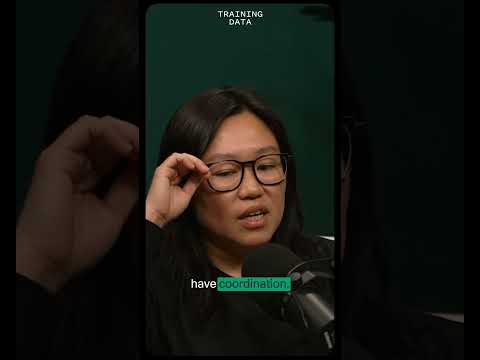
Anthropic's Angela Jiang breaks down the abstraction stack behind Claude: knowledge (answering questions), execution (doing real work via Claude Managed Agents), and coordination — "strategies," a meta-harness where tokens get different jobs. Some advise, some execute, some dream. And the roadmap only moves up the stack.
07

A long form Q&A with Cat Wu (Head of Product, Claude Code) and Thariq Shihipar (Engineer, Claude Code) from Anthropic, moderated by Simon Willison. The discussion focuses on the evolution of coding agents and how they have fundamentally shifted software development practices. Key Takeaways: Changing Developer Workflow (1:22 - 3:51): Coding agents like Claude Code have moved developers from manual, low-level implementation toward higher-level product strategy. The focus has shifted from writing every line of code to managing and refining outputs from increasingly capable models. The Rise of Pr
08

Lee Robinson discusses the future of Cursor and AI-native software development. Speaker: Lee Robinson — ML, Model Behavior, Cursor Model research and personality at Cursor. Previously Vercel. X: https://x.com/leerob LinkedIn: https://www.linkedin.com/in/leeerob/ GitHub: https://github.com/leerob Website: https://leerob.com Timestamps 0:37 - Introduction and recursive model improvement overview 1:55 - The two-loop training framework (inner and outer loops) 2:33 - Progress and success of Composer 2.5 4:31 - Improving the outer loop with user feedback 5:40 - Climbing the inner loop with high
07
Papers
01
02
03
04
05
06
07
08
08
Issue Monitor
Ready now—Actionable issues
Needs review—Awaiting a fresh check
Data statusCheck statusLive status unavailable