01
ZhangYvJing's
Daily Brief
00
Film / Book Chapter
Paterson
Paterson (2016) · Jim Jarmusch
今天适合看《Paterson》,因为它更像一次生活和判断方式的校准,能把注意力从持续输入里稍微抽出来,重新放回你真正想怎样生活和做事上。
The Pragmatic Programmer
The Pragmatic Programmer · David Thomas / Andrew Hunt
Chapter 1: A Pragmatic Philosophy
A compact reset on ownership, taste, entropy, and being the kind of engineer whose work keeps improving after the first pass.
01
Insight
今天的输入表明,技术社群正从打造昂贵、单一的硬件解决方案(如 $120k 的球道计分系统)转向构建高效、可协作的软件代理体系;从闲置的香蕉种植被气候逆袭的噪声中,看到更深层的环境加速与技术需求的错位;从大量 hacknews 的硬件项目与低成本替代方案、海量预算的租借模型的对话,到 YouTubeγραφήγ 演讲者对评估、成本和所有权的批判,双重判断显现:一方面,低门槛的 ESP32 取代昂贵硬件显露出行业对物料成本敏感性的再确认;另一方面,CoPilot、Meta X 等平台的租赁模型被社区以“租学、租用、租付”批评,强调要把模型真正迁移到私有基础设施以实现成本可控与安全可主控的必然性。与此同时,arXiv 论文中的 AutoSynthesis、SearchOS‑V1 与 teLLMe 通过多智能体共享、可视化状态管理解决信息搜索与证据合成的长尾循环,正好呼应了 YouTube 讲者对评估异质性与专案化挑战的阐述,证明技术讨论恢复了对真实任务节奏和量化成功的关注。综上所述,技术聚焦已从硬件成本“ prosecutors”向软件治理与成本透明化的“ practitioner”转,若要抓住机会,应将评估和所有权放在首位,正是这些跨领域的并行折射在今天的技术生态里,Paterson (2016)提醒我们:细腻的、可量化的工作是实现技术实践成熟的关键。
03
Hacker News
02
03
HMD Touch 4G 上市,仅在印度推出,融合功能机与智能机特性的一款混合机型。它在小机身内提供云电话、Express Chat 视频通话、文字和语音信息,并支持 Wi‑Fi 热点,兼容多频4G LTE,兼具低价可靠与触摸屏体验。印度用户将获得更灵活的网络连接,降低频段兼容成本,并可通过云服务提升沟通效率。
04
05
Claude Code v2.1.181 之后的版本已集成 Rust 编写的 Bun,Linux 上运行速度提升约 10%。在 /.local/bin/claude 里搜索字符串可证实存在 “Bun v1.4.0”,且该版本尚未在 GitHub 上发布,仅作为预览版维持可用。由于生产环境中已有数百万台设备运行 Rust 版 Bun,Claude Code 的更新虽细微,却确保了更高的运行效率与兼容性。
06
雷亚利花园的200株香蕉植株在经历15年未结果后,近日终于第一次结出果实。气候变暖使热爱植物 Erde如香蕉、橄榄、无花果和杏子更易萌芽,英国传统作物如覆盆子和大黄在部分地区衰弱,而种植者用围墙创造微气候来抵御霜冻。此变动将改变英国庭园爱好者和专业园艺师的养护方式,需调整围护成本、热量管理以及对果实产量与品质的预期。
07
08
09
10
04
YouTube
01

Code has become the fastest medium for producing technical content, but the most important piece isn't a secret agent skill or a magical framework: its the same thing that makes a great developer experience. Speakers: - Matt Palmer (Conductor): Matt Palmer is a DevRel & product leader focused on AI devtools, developer education, and making complex concepts accessible. Away from the keyboard, you can find him lifting, hiking, riding motorcycles, or caring for plants. X/Twitter: https://x.com/mattppal LinkedIn: https://www.linkedin.com/in/matt-palmer/
02
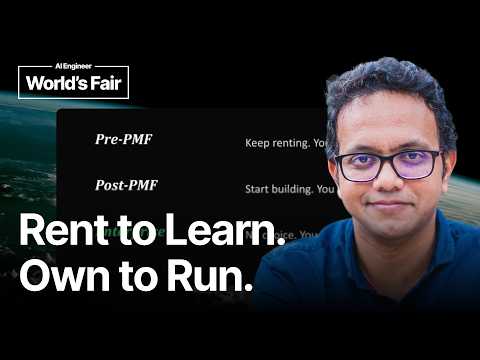
I pointed my lab at one problem, inference, after 200 users burned $1,000 in credits and the math just wouldn't close. So I built the thing, felt the cost, and went looking for why renting intelligence never pencils out. Turns out everyone in this market sells a gospel shaped like their own invoice. Jensen: build a token factory. Nadella: don't even think about the meter. Fireworks: own your model (on our infra). Three smart people, three different layers, three pitches that all end at "keep paying us." My rule: rent to learn, own to run. Rent the model while you're hunting PMF, own the infere
03

04

We ran auto-improvement loops on a paper classification task against a ground-truth dataset. A real problem, narrow enough to measure precisely, and in fact one of the few clear cut target functions out there. We’ll share how to properly set up an agent for auto-improvement, what task specificity and target function quality is actually required for it to work, and why the most efficient path to a continuously improving agentic system is one where domain experts and automation know when to hand off to each other. Speakers: - Annabell Schäfer (Langfuse): Annabell is a Growth En
05

The UX of AI: Making AI-Powered Apps Your Users Don't Hate - Kathryn Grayson Nanz, Progress Software
As a developer, AI is fun, exciting, and full of potential – but users don't always feel the same way about it. From a UX perspective, AI comes with a whole new set of considerations around user trust, privacy, and security. From a UI perspective, AI brings new interaction patterns, new icons, new visual cues, and so much more! If we want people to get the most from what we build, we have to teach our users how to use AI. Let's look at ways to introduce new capabilities in our apps and guide our users through new patterns and processes – ideally without making them throw their phone out a wi
06

07

08

Your agent passes offline evals at 90%. You ship. Production immediately finds failure modes your eval never saw. Sound familiar? The culprit is almost always the same: the "customer" in your offline eval is an off-the-shelf LLM that sounds nothing like your real users, and your synthetic test set doesn't capture how messy, angry, or off-topic real conversations get. Your eval was too easy. At Lyft, our customer-care agents resolve roughly a third of all customer issues — millions of conversations a month. To trust them at that scale, we built an adversarial user simulator: a fine-tuned LLM
09

Performance issues silently pile up in mature codebases. Teams know things could be faster, but can never justify pausing feature work to investigate. You have to put engineers on it just to find out if there's something worth fixing, and the effort is completely unpredictable: it could take an hour or three weeks. In this talk, we'll walk through a real case study of adding runtime intelligence to coding agents to enable continuous performance optimization in production. We'll cover the pain that led us here, the technical approach (agents analyzing real production context to surface high-RO
10

We built a demo agent to show customers how to connect agents to their tools. A simple chat assistant — Gmail, Calendar, a handful of connectors. It ran on a 15-minute schedule. And every 15 minutes, our production database strained. Latency crept up and alerts fired. Then settled. Then, it fired again. It took us a while to find it. One line - a "last seen" timestamp updating on every tool call. Written for a human who logs in once. Our agent was calling it sixty times a second. We had built infrastructure to show customers how to connect agents to their tools. We hadn't noticed we'd built
11

This talk examines the engineering challenges of building foundation models for single-cell biology from a non-biologist’s perspective. Speakers: - Akram Baharlouei (Altos Labs): Machine learning engineer at Altos Labs working on foundation models for biology. Previously at Meta AI and Qualcomm. LinkedIn: https://linkedin.com/in/akram-baharlouei-61784421
07
Papers
01
传统量化证据合成耗时且难扩展,AutoSynthesis 通过多智能体协同,自动完成检/article,筛选、统计提取、效应估计、异质性与偏倚评估,并输出 PRISMA 合规报告。其结果与专家手工相近,证明全流程自动化可显著提升可扩展性,适合 Agent/AI 产品工程师快速集成的端到端知识合成模板。
02
交通监测机构面临海量驾驶视频,却缺乏今年能解释因果见解。teLLMe 用 PC 算法、Bootstrap 稳定性检验、DoWhy 线性回归及 LLM 把自然语言问题自动转成结构化因果查询。它把结果封装成“因果卡”,列出效应估计、调整集、DAG 支持与假设,并给出简短可读解释。对 Agent/AI 产品工程师而言,可快速生成可验证的因果假设、显示不确定性,帮助决定何时调度路由或调整行为。
03
问题:多轮信息搜索时,Agent 难追踪任务进度,困在搜索循环,浪费预算,导致输出不完整。做法:SearchOS 将搜索状态抽象为“前沿任务”“证据图”“覆盖地图”“失败记忆”,并用管道式并行调度让子Agent持续填补缺口;中间件捕获搜索调用,记录证据并抑制重复失败;分层技能系统提供策略和访问技能。值得关注:它把模糊搜索过程转为可共享、可监控的系统状态,显著提升搜索效率与结果完整度,正 Tensai 等产品在构建可协作信息检索 Agent 时极具参考价值。
04
问题 awaken: 如何用链上交易和社媒情绪即时判定比特币市场情绪,而非仅预测价格。做法:将区块链交易、历史行情与每日Twitter情绪合并为统一数据集,用XGBoost进行情绪 OWN分类,并用SHAP解释特征贡献,平均F1≈0.84。值得关注:模型高效且可解释,可直接嵌入 Agent 或投顾系统,演示链上信号如何驱动行情,为区块链 AI 产品提供可落地框架。
05
现有安全 clears 评测只抓成功率,忽视推理与工具调用的实际能耗。作者把 Cybench 端红队任务和 Splunk BOTS 蓝队 SOC 调查拆成固定成本级别比较,进一步分解各项支出(推理支出、工具支出)。结果发现:攻击侧性能随预算提升而显著提升,开源大模型可用低成本与专有系统相媲美;而防御侧成败更在于工具管控与精准查询,而非单纯的计算预算。对想在 AI/Agent 方向快速挑选既能实战又能省钱的产品工程人,这份成本兼顾的基فاء能帮你规避“花钱不见效”风险。
06
解决 omni‑modal 媒体缺乏空间逻辑的问题:让“何物”与“何处”同时被编码。通过 SceneBind, хитай先用全局语义嵌入再拆分为对象‑中心的 semantic‑spatial slots,捕捉每个实体的语义、位置和不确定性;随后用 SceneBind Matching 把全球相似度与 registrada 对齐,支持跨模态检索与目标定位。它只需少量额外 token 即可在大规模预训练语义模型上加装空间曹,能在场景检索、空间检索上取得 SOTA,并在音视定位等下游任务中实现强大零‑shot 转移——工程师想把多模态嵌入变成“heart‑to‑brain”控制系统,SceneBind 就是快捷通路。
07
科研论文的图表编辑常耗费大量时间,SciDiagramEdit 通过挖掘 arXiv 版本历史中的前后图对,利用 natural‑language 指令在矢量源上不断演进编辑技能;其 agentic proposer 在多轮迭代中自我完善动作规范,最终实现精准的图形修改。对于专注 Agent/AI 产品的张玉璟,这展示了以真实稿件改动为训练信号、跨模态解析与可编程图形编辑相结合的实战范式,值得一看。
08
MeanFlow生成器通过时间区间平均速度实现极快的采样,却缺少与人类偏好对齐的RL方法。本文提出 MeanFlowNFT:先用 MeanFlow 同识别构造瞬时速度预测器,再将 DiffusionNFT 奖励投射到该预测器,维持少步平均速度采样的前提下完成政策提升。工程师可在保持 4-步采样的前提下,获得比多步 RL 调优扩散模型更高的 VBench 分数(如 84.33 超 82.57),为实时 Agent 或 AI 产品提供更快、更优的生成方案。
08
Issue Monitor
Ready now—Actionable issues
Needs review—Awaiting a fresh check
Data statusCheck statusLive status unavailable