ZhangYvJing's

Daily Brief

← August 07, 2026 August 08, 2026 · Saturday August 09, 2026 →
00

Film / Book Chapter

Moneyball
2011 / Bennett Miller

Moneyball (2011) · Bennett Miller

今天适合看《点球成金》,因为它讲的不是体育,而是在旧评价体系失灵时,怎样靠更冷静的判断和证据重新决定什么值得下注。

Show Your Work!
Austin Kleon

Show Your Work! · Austin Kleon

Chapter 2: Think Process, Not Product

A light but useful chapter for making ongoing work visible without waiting for perfect finished artifacts, which fits a public career surface.

01

Insight

今天的输入更像几股不同语气的材料同时挤在一起:社区链接在暴露工程和产品环境里的真实焦点,长视频在把这些焦点放回更完整的语境里,研究材料则提醒人热度和可落地性并不总是同一件事。如果先不急着做结论,至少可以把这几条线索放在一起看:Hacker News 的 AMD acquires Taalas to boost inference performance by etching models in silicon;Hacker News 的 Oracle bans AI-generated code from OpenJDK;Hacker News 的 DeepSeek V4 Flash 0731;Hacker News 的 Assembly Hall of Shame;Hacker News 的 An all-sky map of half a million supermassive black holes;Hacker News 的 New Mexico court orders Meta to pay $567m over harms to children’s mental health。真正值得注意的不是单条内容本身,而是它们共同指向了什么、彼此漏掉了什么。
03

Hacker News

01
AMD收购AI芯片初创公司Taalas,目标是通过在硅片上刻蚀模型来提升推理性能。Taalas的模型专用集成电路可每秒产生多达17,000个令牌,显著降低推理延迟并提升吞吐量。此举将改变AI推理工作流程,降低算力成本,提升模型部署的效率与可靠性。
02
Oracle bans AI-generated code from OpenJDK
Oracle 宣布禁止在 OpenJDK 仓库提交 AI 生成代码,仅允许开发者私下使用大模型调试审查。此政策基于安全、知识产权和法律风险考量,与公司内部称 AI 编写自身代码、依赖工具加速交付的做法相矛盾。对贡献者来说,提交需经过额外人工审查,可能提升合规成本并改变协作流程。
03
DeepSeek V4 Flash 0731
DeepSeek V4 Flash 0731 在 ARC-AGI-1 半私有测试中以 89.0% 准确率完成任务,成本 0.02 美元。 在 ARC-AGI-2 半私有测试中,模型以 61.4% 准确率完成任务,成本 0.04 美元,显示更复杂推理场景下性能下降。 结果表明,使用 DeepSeek V4 Flash 0731 可在推理任务中提升效率,但在高深度推理需求下仍需权衡准确率与成本。
04
Assembly Hall of Shame
关键变化:Assembly Hall of Shame 将单指令性能的极限而非加速作为测评目标。通过在 PCIe fabric 的高延迟 MMIO 区域加载 512 字节状态并让多核持续高频读写,导致 fxrstor64 指令被排队等待,暴露出硬件资源争用与微架构路径瓶颈。 这一发现让低级软件工程师、驱动开发者和安全分析师必须重新评估指令级延迟对系统吞吐、实时性与攻击面设计的影响。
05
SDSS‑V 的黑洞映射器发布了首个南半球光学观测数据,首次与 eROSITA X‑ray 识别同步,覆盖约 500,000 颗星系与 1.5 百万颗星。通过将 SDSS 光谱与 eROSITA X‑ray 地图配对,SPIDERS 识别约 200,000 个 X‑ray 目标,揭示大多数高能源为活跃星系核,显示早期宇宙中快速增长的超大质量黑洞更为普遍。该跨波段大样本使研究者能够在多时间尺度下追踪黑洞质量与吸积变化,降低对单一波段观测的依赖,提升对宇宙早期黑洞演化的理解。
06
新墨西哥州法院下令Meta向儿童心理健康基金支付5.67亿美元。该判决基于三月陪审团认定Meta明知损害儿童心理健康并掩盖平台上的性剥削,已被处以3.75亿美元罚款,现追加此款。法院还命令Meta改进年龄验证、设置信息屏幕并与学校合作建立举报门户,需每半年报告进展。 这些裁定将使Meta在新墨西哥州的运营成本上升,必须投入人工智能年龄评估、删除13岁以下用户数据,并接受州监管。
10
Show HN: Wyzer Programming Language
Wyzer 发布了一种新型编程语言,主张用单一所有权规则解决内存、线程和网络安全问题,并声称能在不牺牲性能的前提下提升代码可读性,同时保持编译速度与可维护性。通过引入 Perceus 引用计数模型和协作式编程框架,Wyzer 能在编译期检测并预防分布式死锁、协议不匹配以及跨服务错误,避免运行时崩溃。 这意味着系统开发者可以在不依赖垃圾回收器、复杂借用检查器或异步等待机制的情况下,编写更安全、可预测且易于维护的系统级和网络级代码,从而降低运行时错误、调试成本,并提升部署可靠性。
11
not much happened today
Meta's Muse Spark 1.2 rapidly rose to frontier-tier with top 5 ranking on Vals Index at $0.69/test, being 3x cheaper than Kimi and 10x+ cheaper than Fable, Opus, and 5.6 Sol. It achieved gold-medal-level performance in five STEM Olympiads with perfect theory scores in APhO and IPhO, emphasizing *"no
04

YouTube

02
Run terminal bench on Opus and on Haiku and Opus scores about three times better at a tenth of the cost, even though Haiku is far cheaper per token. Alex Atallah's point is that a small model pushed outside its training distribution thrashes, calling tools in loops until it costs more than the expensive model ever would. That inverts the obvious version of model routing, where you send each task to whichever model benchmarks best on it. Walden Yan calls that approach fragile for exactly the reason agents make it worse: a session starts as a question about a codebase, becomes a feature request,
agent, ai_frontier, ai_product, engineering
03
Quantize a single number in a model and it gets 20% dumber. That finding, from the super weights paper, is why Daniel Han's claim is less absurd than it sounds: GLM 5.2 goes from 1.5 terabytes to 250 GB, 86% smaller, without being 86% dumber. Layers are wildly unequal. The first and last carry enormous weight, the middle ones barely matter, and a model trained on 30 trillion tokens never saturates its parameters, so many sit near zero and can simply be set there. Choosing which layers stay in high precision is a combinatorial search, not a setting. NVFP4 is the format the NVIDIA side leans on
agent, ai_frontier, ai_product, engineering
04
When Fable was pulled back and access to frontier systems stopped looking guaranteed, Lucas Atkins watched enterprises move to Chinese open models, not because they scored better but because availability could be counted on. That is his working definition of trust, and he separates it hard from safety: an open model is a directory of files you can inspect, running on code you can read, while the same claim about a closed API is unverifiable by construction. Arcee's response was to reorient the whole company and pretrain a 400 billion parameter model in six months, which he says plenty of peopl
agent, ai_frontier, ai_product, engineering
07
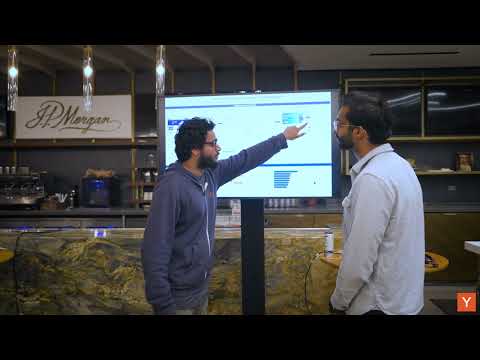
At our inaugural YCML at Startup School, YC Partner Ankit Gupta speaks with Jitesh Jain about building video agents that can adapt their reasoning to videos of different lengths. Current agents often struggle with long, open-ended video questions because temporal grounding is unreliable and training data is expensive. SAGE combines visual tools with transcripts and web search, then uses synthetic question-answer data, tool trajectories, and reinforcement learning to teach the model when each source of information is useful. As videos become longer, the agent takes more reasoning steps and imp
agent, ai_frontier, ai_product, market, product, startup
08
At our inaugural YCML at Startup School, YC Partner Ankit Gupta speaks with MIT PhD candidate Jovana Kondic about ChartNet, an open-source data generation pipeline and million-scale dataset for chart understanding. Charts require models to combine visual recognition, text understanding, and numerical reasoning. ChartNet generates diverse examples by translating charts into plotting code, augmenting that code, and rendering new images with corresponding tables, summaries, and reasoning traces. Training on ChartNet improved open-source models across a range of chart tasks and transferred to rea
ai_frontier, ai_product, market, product, startup
09
At our inaugural YCML at Startup School, YC Partner Ankit Gupta speaks with Mark Žnidar about predictive models that work directly with relational databases without flattening their tables or manually engineering features. The method represents a relational database as a graph, samples the relevant neighborhood around an entity, and uses specialized attention mechanisms to capture columns, features, and relationships across tables. This preserves information that is often lost in traditional tabular machine learning pipelines. Despite having only 22 million parameters, the model outperformed
ai_frontier, ai_product, market, product, startup
10
At our inaugural YCML at Startup School, YC Partner Ankit Gupta speaks with Surgan Jandial about evaluating how web agents plan, rather than only measuring whether they complete a task. The work breaks planning into individual skills such as temporal ordering, future-state prediction, action selection, and error correction. It then repurposes existing datasets to create inexpensive synthetic tests that measure each skill independently. These scores correlate with agents' performance on complete web tasks, providing a cheaper and more interpretable way to identify their weaknesses before runni
agent, ai_product, market, product, startup
07

Papers

01
解决手工写数据语义层的瓶颈——让数据库自动生成可直接用于查询、报告的“analytic semantic schema”。TYTAN 先用符号分析提取表结构,再借助 LLM 进行实体提议、角色分配与命名;若推断不确定,系统会主动用自然语言向用户提问,确保结果准确。实验显示覆盖率 100%,检索命中率 100%,语义角色匹配率 92‑100%,大幅降低专家依赖,正是 Agent/AI 产品需要快速理解并利用多源数据的理想工具。
02
Scalable estimation of VARMA models
VARMA模型在高维下估计成本高、非凸且需遍历全序列,难以实用。作者提出基于偏自相关重参数化、Gaussian先验和Parseval恒等式的固定尺寸统计量框架,使每次迭代与序列长度无关,既保证平稳性与可逆性,又实现近线性计算。该方法在10–40维场景下逼近oracle预测误差,优于传统VAR、Bayesian‑VAR、稀疏VARMA,且可扩展到VARMAX、季节性与滚动窗口,适合需要高效多变量时序预测的Agent/AI 工程。
03
解决 LLM 代理长轨迹中的“关键错误定位”难题,采用多粒度历史压缩与证据驱动的错误生命周期追踪框架 TrajDebug,能够在漫长、错综复杂的指令与观察中精准定位最早导致最终失败的错误,并追踪其解决状态与终端影响。该方法在 TrajErrBench 上表现优于现有基线,且诊断结果可直接为后续代理改进提供可操作的反馈,值得从事 Agent/AI 产品工程的张玉璟快速了解。
04
论文解决终端任务难度不匹配的问题:验证只保证可执行,却不说明任务对不同求解器的挑战度。作者提出 CalibForge,利用多求解器对抗校准和对比校准,依据已验证的求解器行为自动修正任务,形成 5,431 个可学习区间内的终端任务。实验显示,使用这些校准任务训练的模型在 Terminal‑Bench 2.0、SWE‑bench Pro、Doc2Repo 上分别提升 32.58%、47.57% 及显著 24–30 个百分点,证明基于求解器相对可学习性构建数据的有效性。
05
解决部署 AI 代理的持续参与治理问题,提出基于资源分配的机制设计模型:通过“治理货币”与计算预算挂钩,利用阈值门控与签名计算许可实现自我执行的授权。该框架把安全治理转化为可量化的计算支配,兼顾合规与共识,适合关注 AI 产品安全与可控性的工程师快速了解。
06
现有视频基准混合事件计数、频率、时长与视觉复杂度,难以定位模型缺陷。作者用可执行事件轨迹对弹球碰撞、眨眼、状态切换三类受控视频做参数化计数,系统变更事件数 N 与频率 F,逐帧评估。实验揭示 VLM 在高频/高计数时几乎失效,采样率提升仅微增准确度,提示视觉访问是主要瓶颈。此方法把聚合准确度拆解为时间诊断,对需要精确事件追踪的 Agent/AI 产品研发尤为重要。
08
心衰EHR特征工程耗时占数据科学家 40% 以上,手工规则难以维护。nMAS 采用多智能体与证据链接的 rubric‑grounded pipeline,自动生成 132 结构化特征并通过 LLM 审计,保证可追溯性。实验显示 AUROC 提升至 0.963/0.910,证明可在 Agent/AI 产品中快速集成、验证且可扩展。