ZhangYvJing's

Daily Brief

← May 28, 2026 May 29, 2026 · Friday May 30, 2026 →
00

Film / Book Chapter

First Man
2018 / Damien Chazelle

First Man (2018) · Damien Chazelle

《First Man》用细致的工程决策与失控风险交织的太空历程,恰像你今天在 Claude、Postgres 工作流和 AI 代理里反复校准模型与责任边界的状态,让你在面对高压执行和不可预的失落时,重新感受到专注、理性与情感并行的力量。

The Beginning of Infinity
David Deutsch

The Beginning of Infinity · David Deutsch

Chapter 1: The Reach of Explanations

A broader chapter for sharpening what counts as a good explanation, useful when daily inputs are full of claims, demos, and partial narratives.

01

Insight

今天的材料显示,AI 代理的焦点正从单纯让模型“会写代码”转向让系统自带可靠的安全与可解释层,技术细节与治理束缚的互动成为核心分水岭。Claude Opus 4.8 在基准上全线提升,却仍以同价提供,说明厂商把成本和速度当作竞争主阵地;但 YouTube 上 Daniel Szoke 强调 Rust 编译器的强约束,和 Priscila Andre de Oliveira 把“先理解后编码”写成日常必备技能,都是在提醒:模型生成的代码若缺少语言/编译器的硬约束,就会产生隐蔽的错误,纯粹提升模型速度并不能解决根本安全问题。与此同时,ArXiv 里两篇关于语义元数据和自蒸馏的论文分别指出,结构化数据(schema.org)仍是提升检索准确率的关键,而利用经验库中的“技能”进行门控自蒸馏可以在缺少可信答案的情况下提升推理质量,这两点共同印证了社区对“可验证、可审计”机制的共识:即使 LLM 能直接抓网页,也需要显式的元信息或多教师监督来防止“最后一公里”失效。相对的,Hacker News 上的 “Just Use Postgres for Durable Workflows” 与 “Most Enterprise Agentic Projects Are Doomed” 把注意力拉回到基础设施和组织协同,前者用关系库简化编排,后者则警示即使技术快装好,跨团队的审批链仍会把产品推向一年以上的延迟,凸显了技术与治理之间的错位。再看 Sequoia、a16z 与 Latent Space 的访谈,企业创始人把产品定位为“信仰体系”或“背景代理”,而不是单纯的功能模块,暗示商业层面正把用户粘性与价值观绑定,这与学术上强调安全监督(Calibrated Collective Oversight)和可解释验证(OmniVerifier‑M1)的趋势形成对照:一边是围绕用户认同塑造的生态圈,一边是为防止失控而构建的形式化安全框架。综合来看,今天的信号明确:AI 代理的竞争不再是速度或模型尺寸的赛跑,而是围绕“可验证的安全」「结构化的数据管道」以及「跨组织的治理流程」展开的多维博弈,产品团队需要在提升模型能力的同时,投入等量的工程约束和制度设计,才能把技术转化为可靠的业务产出。今天的阅读建议先把注意力放在安全与可解释的底层机制,而不是单纯追逐新模型的快感,顺便提醒一句,今晚可以放松下,看看《First Man》(2018)。
03

Hacker News

01
Claude Opus 4.8
Claude Opus升级到4.8版本,基于4.7在基准测试上全线提升并加入“动态工作流”、任务投入量调节以及更快模式等新功能。得益于更高的判断准确性、对错误的自检以及在高投入设置下保持与4.7相同代币消耗的效率,模型在编码、法律、数据和金融文档等场景的可靠性和成本效益均实现显著改善。此更新将直接降低开发者和企业在大规模代码迁移、法律文书自动化和多步骤数据分析中的人工审查与资源消耗。
02
MyBrickLog 现已上线免费平台,允许 LEGO® 收藏者在单一页面记录拥有的套装、标记密封或已拆封状态,并实时查询零售及二手价。页面通过 JavaScript 渲染后可浏览超过两万套历史主题、生成愿望单以及统计每套套装的所有小人仔,帮助用户快速比对收藏价值。此功能将使个人藏家在管理库存、评估买卖成本以及规划交易风险时,依赖统一工具而非分散手工记录。
03
Just Use Postgres for Durable Workflows
把外部编排服务换成直接在 Postgres 中实现持久化工作流;工作流状态只写入数据库,应用服务器轮询工作流表并通过行锁和完整性约束保证每个工作流仅被一个工作者消费,数据库本身承担检查点、恢复和并发控制;这让依赖 Postgres 的团队省去独立编排服务的部署与运维成本,降低单点故障风险,并可用已有的 SQL 监控和安全策略直接管理工作流。
04
《Tron: Legacy》里萨姆查询历史时使用了“bin/history”而非普通的内建 history,作者指出这暗示画面中的命令是通过预先配置的脚本生成而非真实Shell行为;随后解析萨姆先以普通用户登录、因密码错误改用 UID 0 的 backdoor 账户并因缺乏家目录而把根目录当作工作目录,说明影片在细节上兼顾了 Unix 权限和路径机制;这些分析提示编剧在构造科技镜头时必须了解系统内部细节,否则会增加影片制作成本并可能让技术审查更严格。
04

YouTube

01
TypeScript is easy for models to write because it imposes few constraints. Those same missing constraints let models introduce data races that compile, run, and only fail intermittently. A thread safety bug in Rust does not compile. The compiler names the unsound type, explains why it cannot be sent between threads, and points the agent directly at the fix. Daniel Szoke, Rust SDK maintainer at Sentry, argues that optimizing for a language models can write easily is the wrong goal. The better optimization is a language whose compiler enforces correctness as a natural feedback loop. Every error
agent, ai_frontier, ai_product, engineering
02
Priscila Andre de Oliveira analyzed 116 of her own Claude sessions from daily work at Sentry. 67% were comprehension. 2% were code generation. Working in a codebase with 15 years of history, around 100 PRs merged per day, and 100,000 organizations depending on it, the unlock is not generation but understanding. She built a personal skill called catch me up with six exploration modes covering architecture, conventions, feature traces, syntax, testing, and history. The loop: understand what the agent found before you let it plan and implement, because a misaligned mental model is where slop com
agent, ai_product, engineering
03
Full episode: https://youtu.be/PAIhVfGbREA Me on x: https://x.com/dwarkesh_sp Renaissance historian Ada Palmer explains why Italy – the richest region in Europe – never unified, how the Pope had the money and armies to conquer Italy but couldn't consolidate, and why Machiavelli believed regime change always costs more lives than tyranny.
ai_frontier, market, problem_definition
04
Notion CEO Ivan Zhao and Brian Halligan on why companies are belief systems, and why the Catholic Church might be the longest-running tech company of all time. #shorts #podcast #notion
ai_product, market, startup
05
DJ Seo, co-founder and president of Neuralink, joins Sequoia partner Shaun Maguire at AI Ascent 2026 to talk about what it takes to build the bridge between the human brain and AI. He walks through how Neuralink has gone from one human patient to over twenty, what it has been like to watch quadriplegic patients regain control of computers and robotic limbs through pure thought, and where Blindsight — the company's vision-restoration product — stands today. Also: why DJ believes AI will eventually become an exocortex layered above the human neocortex, why the real ceiling of this technology is
ai_product, market, startup
06
Angela Strange speaks with Dileep Thazhmon, founder and CEO of Jeeves, about building a global financial operating system for enterprises across Latin America using stablecoins and AI. The conversation covers the challenges of building localized financial infrastructure across 25 countries, from regulation and payments to underwriting and compliance. They also discuss why stablecoin adoption is accelerating in Latin America, and how AI is helping Jeeves scale billions in payment volume while automating underwriting, customer support, reconciliation, and KYB workflows. Timestamps: 00:00 - Int
agent, ai_product, market, security, startup
07
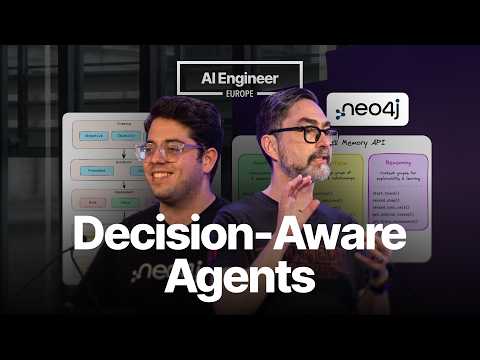
Prescribing drug X is correct 99% of the time for symptom Y. For the 1% where it is fatal, statistical reasoning does not help you. Andreas Kollegger calls this reference class validation: before the agent acts, it has to know which group it is in. Context graphs give agents the why. Not just knowledge and tools but the policies, rules, and prior decisions that explain why a certain action is right in a given context. The decision making framework in this talk has five stages: frame the problem with its causality and environment, pull in global rules and past precedent, run a risk value analy
agent, ai_frontier, ai_product, engineering
08
Most labs start from pre-training and scale up. Cursor flipped it. Federico Cassano breaks down the top-down approach: start with what's useful to users, then specialize. The result? A frontier coding model shipped in a fraction of the time. #shorts #Cursor #Composer #AITraining #LLMs
ai_frontier, ai_product, market, startup
09
Jess Grogan-Avignon and Jack Wang at Accenture built an agentic application in two weeks. Getting it to production took another 12 months. Not because the code was wrong. Because the infrastructure team, the security team, the AI gateway team, the data governance team, and the application team all had to align before anything could ship. That is not a technology problem, and fixing the code does not fix it. The deeper issue is that GitHub averaged 275 million commits per week in 2025 on track for 14 billion by year end, while the approval infrastructure was never designed for that throughput.
agent, ai_product, engineering, security
10
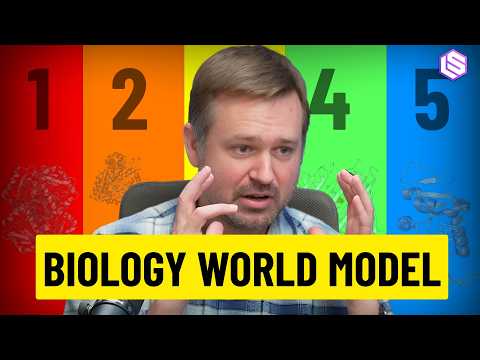
Editor’s note: In our first BioHub pod with Priscilla and Mark they discussed their acquisition of EvoScale, led by Alex Rives, who is now Head of Science at BioHub. With ESM-1 they trained language models on millions of protein sequences drawn from across life, with a simple “next token” objective: predict the amino acids that have been randomly masked out, based on the context of the rest of the sequence. But they soon found that these models also learned biological structure and function, including properties the model had never been explicitly shown AND that this ability scales predictably
ai_frontier, engineering, startup
11
From coining “context engineering” to building the infrastructure behind Devin’s 7x PR growth and jump from 16% to 80% of commits across Cognition repos, Walden Yan has had a front-row seat to the background-agent shift. In this episode, Cognition co-founder and CPO Walden Yan joins swyx alongside Cole Murray, creator of OpenInspect, to unpack why everyone is building their own Devin, what changed after the December 2025 model inflection, and why “spec to pull request” is now becoming a real production workflow. We go deep on the architecture of background agents: harness-in-the-box vs out-of
agent, ai_frontier, ai_product, engineering, market, security, startup
07

Papers

01
它在问:在大语言模型可以直接抓取网页的今天,自动化 Agent 仍然需要 schema.org 之类的语义元数据吗。作者分别让一个只读开放网页的 Baseline Agent 与一个基于 9000 万 dataset、带 schema.org 标记的 Semantic Agent 去检索同样的问题,用 LLM‑as‑judge 按 FAIR 指标评估结果。发现语义元数据的 Agent 在实际可用数据的精准度上高 45%‑65%,虽然覆盖率稍低,但能避免“最后一公里”只能拿到说明页的尴尬。对做 Agent/AI 产品的同学来说,这说明即便有强大的 LLM,构建结构化、带元数据的数据平台仍是保证可靠、可执行工作流的关键。
cs.IR, cs.AI
02
它针对 LLM 推理时,教师端只能提供稀疏的验证结果,而缺少可信的答案或路径这类特权信息(privileged information),提出把从经验库中检索到的“技能”当作可复用但可能噪声的 PI。方法是 Skill‑Conditioned Gated Self‑Distillation:先拿技能‑错误对构建多教师池,让每个技能教师对同一学生生成的答案打分,验证器依据正负极性给出正向或逆向的 token‑level 监督,并通过门控机制过滤不确定或极端信号。价值在于,只需要弱 PI 就能比传统 GRPO 提升数个百分点,且实现方式兼容现有自蒸馏框架,适合想把 LLM 推理能力快速落地到 Agent 产品的工程团队。
cs.CL, cs.AI
03
它聚焦 EEG 长时序信号的实时推理难题:传统模型靠注意力,随序列长度二次涨成本,还必须滑窗切分,导致对全局信号缺乏把握。作者提出 CaMBRAIN——基于因果 Mamba 状态空间模型的单向、线性时复杂度架构,并设计多阶段自监督训练,让隐藏状态能记住跨分钟的关键事件。实测在三个 EEG 数据集上刷新 SOTA,推理吞吐提升超 10 倍,首次支持可变长、连续的长序列 EEG 推断,对构建低时延、全局感知的脑机接口或 Neuro‑Agent 系统具有直接参考价值。
cs.AI, cs.HC, cs.LG
04
这篇论文针对 Vision‑Language‑Action(VLA)模型体积巨、推理成本高的问题,提出了 Omega‑QVLA——一种完全后训练、无需再训练的统一 W4A4 量化方案,既压缩语言大模型,又把整个扩散式动作头全部降到 4bit。核心做法是用复合 SVD‑Hadamard 旋转平衡各通道权重能量,再结合逐步 DiT 激活缩放来抑制噪声扩散过程中的动态范围漂移,从而实现稳定量化。实验显示,在 LIBERO 基准上可把模型体积削减 70% 余,成功率仍保持在 98% 左右,实际机器人操作也不再崩溃。对于追求低算力、端侧部署的 Agent 产品,这种“一键全模型 4bit”压缩方案值得一看。
cs.CV, cs.LG
05
它要解决的核心问题是:当大模型输出视觉结果时,怎么让系统既能判断对错,又能给出细粒度、可解释的错误定位。作者提出用“显式结构化重校准”的方式,即让视觉验证器输出符号化的中间证据(如边界框),而不是纯文本解释;再把二元判断和元验证的强化学习目标分离训练。这样既能用规则化奖励避免额外的评判模型,又提升了学习效率和可解释性。对做Agent、视觉交互或自我纠错系统的工程师来说,这提供了一套可直接插入的、能够在生成过程中即时定位并纠正错误的验证框架,帮助构建更安全、可控的多模态产品。
cs.CL, cs.AI, cs.CV, cs.LG
06
它要解决的核心是:在自主规划、长期交互的 Agent 系统里,人在能力上落后时如何仍能保持可靠监督。作者提出 “Calibrated Collective Oversight (CCO)”,把一组辅助评分函数合并成对保守基线的偏离惩罚,并用 Conformal Decision Theory 在线校准保守程度,使不良行为的概率始终被控制在用户设定的上限,且没有分布假设。实验显示,即使监督者弱于被监督的强 Agent,CCO 也能把违规率压到理论目标,兼顾高收益。对做 Agent、AI 产品的工程师而言,这提供了一套可量化、可实时调节的安全监督框架,直接帮助在实际部署中把风险控制在可接受范围。
cs.AI
07
该文聚焦“情感音乐推荐”难题:在临床或老年人等不可随意跳歌、报告情绪的场景下,如何让推荐系统依据听众的情感状态(valence / arousal)选歌。作者构建了 AMRS,核心是用因果 Transformer 学到的 rollout‑based 世界模型,同时预测播放行为、二元评分及自报告情感,然后在该模拟环境里离线做 Direct Preference Optimization(DPO),在保持多样性和避免贪婪崩塌的同时提升情感得分。对张玉璟这种关注离线策略训练、可解释 world‑model 与多目标效用函数的 Agent/AI 工程师而言,这提供了一套可在伦理受限环境下安全验证、微调推荐策略的实用框架。
cs.LG, cs.IR, cs.SD
08
它聚焦在“参数高效微调(PEFT)”到底能否在提升下游任务性能的同时保持大模型的通用能力,提出用稳定性‑可塑性(stability‑plasticity)权衡来评估。作者构建了 PEFT‑Arena 基准,既测下游准确率,又量化预训练能力的保持,并通过权重谱分析和激活空间几何解释不同微调方案的差异,发现正交微调在相同参数预算下最接近最优平衡。对研发 Agent/AI 产品的工程师来说,这提供了一套实用的评估框架和改进思路,帮助在有限参数增量下既提升任务适配,又防止关键通用知识遗忘。
cs.LG, cs.CL