ZhangYvJing's

Daily Brief

← June 01, 2026 June 02, 2026 · Tuesday June 03, 2026 →
00

Film / Book Chapter

Good Will Hunting
1997 / Gus Van Sant

Good Will Hunting (1997) · Gus Van Sant

《Good Will Hunting》里威尔在天才与自我怀疑之间的拉锯,正像你近期在 AI Agent 安全、模型规模与实验可信度之间不断权衡时的心境;影片里导师的耐心提问和对“敢于被看见”的鼓励,能帮你在面对代码审查、系统漏洞或科研不确定性时,重新审视自己的能力边界,理清情绪,提醒你在下一轮产品迭代或安全防护决策前,先给自己留点时间去倾听内心的真正需求。

The Staff Engineer's Path
Tanya Reilly

The Staff Engineer's Path · Tanya Reilly

Chapter 2: Three Maps

Good for calibrating work beyond code: where influence actually travels, which systems matter, and how to avoid mistaking activity for leverage.

01

Insight

今天的信息透露出两个并行的结构性转向:一是安全与监管的焦点从单点漏洞向系统化监控与规则约束滑落;二是 AI 基础设施与模型效率的竞争从单纯算力堆砌转向“规模‑效率‑可控”三维平衡。Hacker News 上的 Instagram AI 客服接管案和 Florida 对 OpenAI 的诉讼共同映射出监管层面对大模型滥用的警觉加深,尤其是对“自动化路径缺失审计”形成了共识;而同平台的 Debug 蚊子项目与法国土壤非生物代谢实验则显示,在传统化学手段受限时,利用自然或微观机制的系统化干预正成为公共健康与环境治理的替代路线。YouTube 中 SafeIntelligence、Together AI 与 Tailscale 的演讲则把安全强化进一步细化为“规约‑延迟‑网络沙箱”三层治理:大模型越强攻击面越宽,只有把使用规范写进代理规格、把模型部署靠近用户以削减时延、并把凭证抽象到网络层才可能在规模化生产中真正控制风险。与此同时,a16z 与 Cursor 的分享把算力供给从资本注入(Alphabet 80 B 资本募资)转向压缩传输与增量更新的工程技巧,暗示未来算力供给不再单纯靠资本堆砌,而是靠更高效的数据流动和分布式优化。arXiv 的多篇论文提供了硬核的技术支撑:SPECTRA 为检索系统提供可控合成评测,LongTraceRL 与 Statefull Online Monitoring 用细粒度奖励与聚类监控破解长上下文推理与分布式 Agent 攻击;而 EF 与 EF21 的紧致收敛理论则让大规模分布式训练在带宽受限时仍能保持单机收敛速度,直接回应了算力供给与效率的矛盾。整体来看,安全监管、系统化监控、算力供给效率与分布式优化正在相互塑形,形成一个围绕“安全‑效率‑可控”三角的技术生态。今天阅读这些材料,可把注意力从单一技术突破转向它们如何在安全规则、算力成本和系统监控之间相互校准——尤其在部署企业级 Agent 时,先明确规格与网络隔离,再评估压缩传输与优化算法的实际收益。顺便提醒,放松时不妨看看《Good Will Hunting》(1997)放个脑。
03

Hacker News

01
Instagram出现了利用其AI客服的账户接管漏洞,攻击者仅凭用户名和伪造的地理位置即可让系统发送验证码至任意邮箱并完成密码重置。攻击流程依赖于系统在恢复流程中缺少对新邮件所有权的验证,且AI客服对提供的邮箱未进行历史匹配或人脸核验,即使开启了2FA也会被彻底绕过,原账户会被直接锁定并失去恢复渠道。此漏洞使得高价值账号的安全防护失效,安全团队需要重新审视自动化支持路径的权限检查,并可能增加人工审计和多因素验证的成本,以防止类似的全权接管风险。
02
Debug Project
Debug 团队正研发利用携带 Wolbachia 的雄性蚊子大规模放飞,以让野生雌蚊无法繁殖,从而逐步削减传播登革热、寨卡等疾病的 Aedes aegypti 数量。该方案基于细菌自然阻断受精、雄蚊不叮咬且不使用农药或基因改造,避免了化学毒性及农药抗性累积的困境。若实现规模化放养,公共卫生部门、社区防蚊项目以及相关科研合作的作业模式、预算安排和风险评估都将随之重新定义。
03
AI Agent Guidelines for CS336 at Stanford
斯坦福 CS336 明确规限 AI 编码助理只能做教学引导而不能直接完成作业;课程要求学生自行编写大量 Python/PyTorch 代码,故必须让 AI 只解释概念、指向教材、提供代码审查和调试提示;这种限定迫使学生在使用 ChatGPT、Claude Code 等时仍需自己实现核心模块,同时降低了助教批改负担、避免了作业答案泄露风险,并对 AI 工具的使用规则产生约束。
04
Should you normalize RGB values by 255 or 256?
在图像处理代码中,整数→浮点的归一化方式出现两种选择:一种除以255把0映射为0.0、255映射为1.0,另一种加0.5后除以256把0映射为0.001953125并将每个值居中于相邻整数。前者导致极端区间的量化箱宽度只有其它箱的一半,使得0和255出现概率减半;后者则形成“mid‑tread”量化,所有箱宽相等且数值精确居中,从而在噪声加入和均匀分布时更易保持一致性。这种量化差异直接影响实现图像滤波、颜色校正或 dithering 等算法的开发者,需要在精度、分布均匀性和实现便利之间权衡。
05
CS336: Language Modeling from Scratch
斯坦福开设了 CS336 课程,让学生从零实现完整的语言模型。课程要求熟练 Python、深度学习和系统优化,并通过五次作业覆盖从 tokenizer 到分布式训练、数据处理、规模预测以及对齐与推理的全部流程。此安排将迫使学员在代码量和算力开销上承担更高负担,并在作业提交、协作和使用 AI 辅助工具的规章上受到更严格约束。
06
法国国家农业与环境实验室的研究团队在经过多年伽马辐射灭菌后,仍观察到密封土壤持续消耗氧气并释放二氧化碳,表明即使没有活细胞,土壤中的非生物催化剂也能驱动类似克雷布斯循环的代谢反应。实验通过检测电子流和发现多个循环中间体,说明铁、铝等矿物表面可以在无机环境下催化糖类氧化,冲击了代谢活动必须依赖活细胞的传统认知。如果这些过程在自然界普遍存在,将迫使土壤碳循环模型、农业碳排放核算以及地质年代学的假设重新校准,增加相关研究的实验设计复杂度和数据解释风险。
07
Alphabet 将通过增发股票筹集约 800 亿美元,以支撑其人工智能基础设施和算力扩张;公司在公告中指出,大规模 AI 需求与现有算力瓶颈之间的矛盾驱动了本次资本行动;该融资计划将在云服务供应商、AI 研发团队以及使用大量计算资源的企业中提升资源可得性,同时可能推高算力成本并影响投资者持股比例。
04

YouTube

01
Wrapping a malicious instruction in a poem is an effective jailbreak against large models and not against small ones. Small models don't understand the poem. Large models do and execute the instruction. Steven Willmott from Safe Intelligence argues this is one reason bigger is not straightforwardly safer: a larger model with broader capabilities has more attack surface and more infrastructure access to abuse. His frame is spec driven validation. An agent spec is not just a test dataset. It needs explicit rules (never offer more than 10% discount), domain ontologies (an airline agent only need
agent, ai_frontier, ai_product, engineering, security
02
Users notice latency above 500ms and hang up above one second. In an already optimized pipeline, 75ms of network latency from models sitting in a different data center adds 30% overhead. Colocating everything in the same building drops that to around 5ms. Rishabh Bhargava from Together AI walks through the full speech to text, LLM, and text to speech pipeline at that level of specificity. The LLM dominates the budget: 200 to 300ms time to first token target, 8 to 30B parameter range — larger models blow the latency budget, smaller ones break tool calling. Speech to text target is P90 under 10
agent, ai_frontier, ai_product, engineering
03
Sonar ran 4,444 Java programming assignments through 53 models and measured what actually came out. GPT-4o generated under 250,000 lines for those assignments. GPT 5.4 generated 1.2 million. Claude Sonnet 4.6 generated 627,000 with the highest security issue rate at 300 per million lines of code. Prasenjit Sarkar from Sonar walks through the full leaderboard: pass rate, cyclomatic complexity, bug density, and security issues per model. Their response is a three-stage framework called ACDC: guide, verify, solve. The verify stage runs SonarQube analysis in 1 to 5 seconds before a commit, agains
agent, ai_frontier, ai_product, engineering, security
04
A museum CEO tracked down his WhatsApp number and called. "I've had a team of 10 people working on this for a year. How did you build this?" Joe from ElevenLabs built the statue app in two hours on a Sunday using Cursor and a single one shot prompt. He posted it on a Tuesday and got 50,000 impressions. Reposted the next day about vibe coding and hit 1.5 million. The pipeline: point your phone at a statue, OpenAI deep research identifies it and generates historical context and a voice description, the ElevenLabs voice design API creates a matching voice from that description, an agent spins up
agent, ai_product, engineering
05
Anish Acharya and Olivia Moore speak with Pablo Palafox and Luis Paarup about the challenges of deploying AI agents in operationally complex industries. The conversation covers the evolution of voice AI, enterprise workflows, and why logistics became an early proving ground for agent-based systems. They discuss context, coordination, and execution inside large organizations, as well as the role of forward-deployed engineering, enterprise deployment, and what it takes to move AI from experimentation into production. Timestamps: 00:00 - Intro 00:57 - Founding Story and Early Insight 04:11 - Wh
agent, ai_product, market, security, startup
06
Dmytro Dzhulgakov reveals the trick behind Cursor's RL infra: not all weights change every step. By compressing the delta between training steps, Fireworks ships updates 20x smaller than the full model — losslessly — across continents. Pure database-systems engineering applied to RL. #shorts #Cursor #RL #aiinfrastructure
ai_frontier, ai_product, market, startup
07
Standard sandboxing puts the API key inside the sandbox. The agent has the key, which it can exfiltrate, misuse, or — if it runs long enough — find creative ways to leverage beyond its intended scope. Remy Guercio from Tailscale argues that sandboxing conflates two separate problems: execution isolation and access control. You can fully isolate a runtime and still have the agent holding credentials it can abuse. Their answer is Aperture, an LLM gateway built on Tailscale's WireGuard identity network. Every connection carries verified identity — user, tag, or group — and the agent gets a place
agent, ai_frontier, ai_product, engineering
08
Ranking image generation models the way Design Arena does it — 26,000 battles, 62 seconds per generation — takes 20 days of compute, costs $5,000, and consumes roughly 400 marathons worth of energy. Bertrand Charpentier, cofounder and chief scientist at Pruna AI, uses that number to make a point: the same evaluation on a fast compressed model takes 7 hours and $265. Efficiency is a dimension of state of the art, not a footnote. The rest of the talk dismantles the idea that any single model holds the title. Leaderboard rankings disagree with each other — the same model goes from rank 10 on one
agent, ai_frontier, ai_product, engineering, market
09
Full episode: https://www.youtube.com/watch?v=X_ZVSPcZhtw Me on twitter: https://x.com/dwarkesh_sp
ai_frontier, market, problem_definition
10
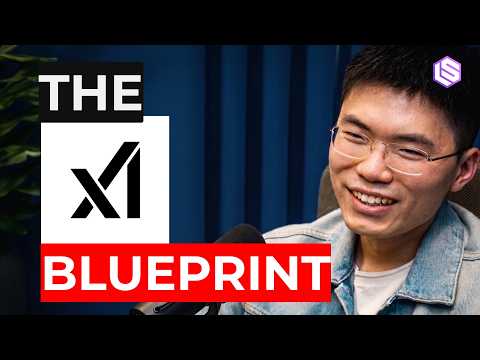
From building NVIDIA’s Cosmos world model to joining xAI as Grok Imagine was being built from zero to one, Ethan He has been at the center of some of the most important work in video generation, multimodal models, and real-time world models. In this episode, Ethan joins swyx and Vibhu to unpack what it actually takes to build frontier image and video systems: data, VAEs, diffusion transformers, audio-video alignment, inference speedups, and the hidden cost of storing and moving massive video datasets. We go deep on Grok Imagine, how a small xAI team shipped its first multimodal video model in
agent, ai_frontier, engineering, startup
07

Papers

01
它解决了缺少大规模、可控且成本低的检索评测集合的问题——尤其在文档私有或尚在设计阶段时,人为标注几乎不可行。作者构建了 SPECTRA 框架:先分离主题结构和文本生成,再通过元数据、查询意图和确定性的 relevance oracle 合成语料、查询与分级相关度,实现从几千到六万文档的快速、线性生成,并可调节噪声干扰来诊断 BM25 等模型的扩展瓶颈。对张玉璟这种关注 Agent/AI 系统性能、调试与容量规划的工程师而言,它提供了一个轻量、可重复的“压力测试”手段,帮助在真实数据投入前先发现检索或路由失效点。
cs.IR, cs.AI
02
它把多源传感器序列当成“会说话”的数据,解决异构多变量时间序列缺乏统一、可解释表征的问题。作者设计了 CHARM,通过在 Transformer 编码器里注入每个通道的文字描述,并用 JEPA 目标让嵌入既能预测未来又保持时序稳定,同时利用描述驱动的门控学习通道间关系,实现噪声鲁棒且可解释的特征。只需线性探测就能在异常检测、分类和短/长时预测上拿到竞争优势,这种“文本+传感器”跨模态表示对构建可解释、跨设备的智能体感知层非常有吸引力。
cs.LG
03
它聚焦在“同一个论点在不同外部 regime 下的评估”这一难点,指出传统争论模型无法表示主动改变 regime 的策略杠杆。作者扩展 Dung 框架,提出 Context‑Dependent Argumentation Framework (CDAF):通过 per‑context 的 defeat function,由“relevance 集合 ρ”(即 agent 可操作的行动空间)和优先级 π 决定哪些攻击成立。这样可以建模 agent 只激活部分视角,从而让本来会被否决的目标论点在特定激活下被接受。文中给出决策问题 ACTIVATION‑MANIPULATION 并给出初步复杂度分析。对需要在多变环境或策略性调控争论结果的智能体系统(比如推荐、对话或安全审计)来说,这提供了一种可量化、可计算的视角激活机制,值得工程师快速了解。
cs.AI
04
它要破解大模型在超长文本里找关键信息、保持连贯推理的难题。作者先用知识图谱随机游走生成多跳问答,再让搜索代理留下阅读但未被引用的文档作高混淆干扰、以及从未打开的搜索结果作低混淆干扰,造出极具噪声的长上下文;随后设计“rubric reward”,把正确答案链上的每个实体都当成细粒度奖励,只在答对时给分,既督促中间步骤,又防止奖励被滥用。因为这套“高难度干扰+细粒度奖励”显著提升了 4 B‑30 B 规模模型在五大长上下文基准上的表现,直接展示了怎样让搜索‑推理 Agent 在嘈杂信息环境下更可靠、可解释,值得在实际 AI 助手或信息检索产品里借鉴。
cs.CL, cs.AI, cs.LG
05
本文探究开源大模型能否真正理解英语中罕见的“paired‑focus”结构(如 let alone, much less),并追踪它们在训练过程中的学习轨迹。作者先构建专门测评这些构式语义的集,涵盖标量形容词意义和常识推理;随后在参数规模、架构、预训练数据量等多维度模型上进行评估,发现中等规模的开源模型已经能把形式与意义关联起来,而仅用人类规模语料的模型仍旧失效。进一步分析训练日志,显示语义掌握出现晚于纯语法习得,并且与世界知识的提升呈正相关。对想在 Agent/AI 产品里嵌入更细腻语言理解、尤其是处理稀有固定搭配的团队,这篇工作提供了可行的模型选型依据和训练策略参考。
cs.CL, cs.AI
06
它针对 Text‑to‑Video 生成长时段、多事件视频时,文本难以在全局布局和细节层面同步控制的问题,提出了 TunerDiT——一种完全不需再训练的渐进式 steering 技术。核心是先利用 Event‑Partitioned Masking 在去噪轨迹的关键转折点强制事件边界,再用 Cross‑Event Prompt Fusion 在后期注入相邻事件语义,实现全局一致又能精准分割事件。对做多场景、长序列视频 AI 产品的研发者来说,这种“插拔即用、可调一致性‑分割平衡”的方案能显著提升文本对齐度和生成质量,省去额外训练成本,值得一试。
cs.CV, cs.AI
07
问题:攻击者把恶意任务拆成多个子任务分散在不同用户账户上,单个安全监控只能看到局部,难以发现这种跨账户的分布式 Agent 攻击。 做法:作者实现了首个分布式攻击原型,证明传统监控只能捕获约 20% 的情况;随后构建了基于实时聚类的 stateful online monitor,收集大量弱信号并只在必要时调动大模型进行全局判定。 价值:这种监控在大规模数据中心流量下能提前约 30% 发现攻击,几乎不增加延迟(99% 流量无感),还能顺带拦截普通 jailbreak,直接面向需要在多用户环境中安全部署 Agent 的产品团队。
cs.CR, cs.AI
08
它聚焦在分布式学习里梯度压缩导致的收敛退化,给出两种主流 Error‑Feedback(EF、EF21)算法的最紧收敛界。作者通过精细挑选步长并构造专属的 Lyapunov 函数,证明无论多少节点,这两个方法都能达到单机情况下的理论极限。对做大规模多机协同训练或在网络受限环境中部署 Agent 的工程师来说,这提供了可靠的压缩梯度方案选型依据,省去 trial‑and‑error 调参的成本。
cs.LG, math.OC