ZhangYvJing's

Daily Brief

← June 03, 2026 June 04, 2026 · Thursday June 05, 2026 →
00

Film / Book Chapter

First Man
2018 / Damien Chazelle

First Man (2018) · Damien Chazelle

在面对AI工具成本上限、跨平台工程安全以及频繁的技术决策压力时,《First Man》那种在高风险、极度专注与深沉失落中依然坚持执行、不断校准目标的航天工程师心境,正好提醒你在追求产品与Agent突破的路上,需要先把个人的焦虑和对未知的恐惧理清,才能在下一段高强度迭代中保持冷静的判断与持久的行动力。

The Mom Test
Rob Fitzpatrick

The Mom Test · Rob Fitzpatrick

Chapter 1: The Mom Test

A short practical check on product conversation: stop asking for validation, start extracting facts, and keep reality from being softened by politeness.

01

Insight

今天的材料体现出两个互相交织的趋势:一是从底层硬件到语言运行时,系统正向“一体化、低成本”方向收敛;二是围绕这些高效基座,AI 代理的产品与评估体系在“可控性‑信任度”上出现显著分化,导致市场语言与工程实现脱节。硬件层面,ESP32‑S31 把 Wi‑Fi 6、Thread、Zigbee、蓝牙 5.4 以及千兆以太网全栈整合进单芯片,直接把多协议安全和低功耗放在原型设计的起点;同类的 Gemma 4 12B 通过去除视觉、音频独立编码器,把多模态输入直接投射到主干模型,进一步压缩显存需求到 16 GB,实现本地多模态推理,这与 Elixir v1.20 用动态类型在不加注释的前提下捕获运行时错误、降低调试成本的“渐进安全”理念相呼应——都是在压缩资源开销的同时提升可靠性。相反,Creative Katana V2X 的固件写入漏洞把蓝牙未配对的远程攻击路径裸露出来,提醒我们在追求硬件一体化的同时,安全边界往往被忽视,形成了噪声与真实风险的错位。 在 AI 代理层面,YouTube 上的 Listen Labs、Fivetran 与 Modal 都在强调“上下文‑连续对话”与“成本‑效率”之间的平衡:Listen Labs 通过 AI 访谈获取更真实的用户语料,Fivetran 则警告盲目开放系统对企业核心数据的风险,Modal 则把 API 成本、评估停滞和延迟作为判断是否需要微调的信号,这些都在阐释“代理需要可控上下文”。而学术论文提供了具体实现路径:ACTS 用轻量控制器在链式思考中动态分配预算,Skill‑RM 把零散的评估规范统一为可调用的 Skill,QUBRIC 则通过共同设计查询‑评估对提升 Rubric‑RL 的可学习性,这两类方法直接印证了产品侧对“可控推理”和“评估一致性”的需求,但同时也揭示出当前评估框架仍在追逐技术可行性而非业务可解释性。更进一步,Confidence‑Expression 与 Formalizing‑Binding 的工作指出,即便在大模型推理或视觉感知中,模型对不确定性的表达和属性绑定的可靠性仍不足,这与 Uber 为每个 AI 编码工具设定的 $1,500/月上限形成对照:企业已经在预算层面硬性约束 AI 使用,而学术界却在探索如何让模型本身更可信、可检查。综合来看,硬件一体化降低了部署门槛,促进了本地多模态与安全边缘计算的落地;而在软件与代理层面,围绕上下文、预算、评估一致性的讨论正从学术原型向商业约束迁移,形成了技术供给与成本治理的双向拉力。今天阅读这些信息后,留意硬件安全的细节(如未签名固件)以及选择能够提供可插拔推理调度和统一评估的模型或框架,将是实际落地的关键,而在闲暇时不妨看看《First Man》感受一下人类追梦的另一种坚持与探索。
03

Hacker News

01
Elixir v1.20: Now a gradually typed language
Elixir v1.20 将语言升级为渐进式类型系统,实现对每个程序的类型推断和逐步检查而无需显式注解。其核心机制是引入 dynamic() 类型,通过兼容性判断在类型不相交时报告违规,并在使用过程中对 dynamic() 进行细化,从而在保持低误报率的同时捕获确定的运行时错误。此改动让所有使用 Elixir 开发的团队能够在不增加代码标注负担的情况下自动发现死代码和可验证的缺陷,降低调试成本并提升部署安全性。
02
Gemma 4 12B 将多模态智能直接装进笔记本,首次在中等规模模型中原生支持音频输入。它通过去除视觉和音频的独立编码器,让原始图像和声音直接进入大模型主干,使用仅一个矩阵乘法的轻量嵌入层和直接投影,从而削减了延迟和内存占用,使模型在16 GB显存即可运行并在基准测试中逼近更大的26 B MoE性能。该设计让开发者能够在本地机器上部署高效的多步推理和代理工作流,降低了云端算力开支并简化了安全与合规管理。
03
作者近期被确诊为抗NMDA受体脑炎,导致免疫系统异常攻击大脑产生炎症。病情从流感样体征和突发焦虑、幻觉发展到颚痛、平衡失调,最初被误判为焦虑或精神分裂症,致使在精神科住院后才转至神经科接受静脉免疫球蛋白和类固醇治疗,随后确认抗体检验阳性并进入临床试验。此案例显示项目合作方、医疗支持团队及健康保险在跨科室诊断和急救药物供应上的流程与费用风险需要重新评估。
04
DaVinci Resolve 21
DaVinci Resolve 21 将全新 Photo 页面引入,首次让 Hollywood 级别的调色工具直接服务于静态照片。AI IntelliSearch、Magic Mask、UltraSharpen 等模块通过内容识别、面部分析和超分辨率实现快速索引、瑕疵去除与锐化,使图像处理从手动标记转向自动化分析。摄影师和调色师因此可以在同一平台完成拍摄、分级与批量管理,显著降低后期人力成本并提升跨团队协作的实时性。
05
Gooey: A GPU-accelerated UI framework for Zig
Gooey 为 Zig 引入了 GPU 加速的跨平台 UI 框架,已在 macOS(Metal)、Linux(Vulkan/Wayland)和浏览器(WASM/WebGPU)上提供声明式组件、状态驱动渲染和自定义着色器等特性;框架通过纯状态模式、实体系统和自动重绘实现了可测试的业务逻辑与 UI 分离,并且不依赖外部 Zig 包,仅链接系统库;这将降低 UI 开发的部署成本、简化跨平台维护,并让使用 Zig 的开发者能够在保持高性能的同时,以更一致的方式构建桌面与 Web 界面。
06
ESP32-S31
ESP32‑S31 将 Wi‑Fi 6、Thread、Zigbee、蓝牙 5.4(含 LE Audio 与 Mesh)以及千兆以太网集成在同一芯片,实现无线与有线的全栈连接。该芯片采用双核 32 位 RISC‑V,320 MHz 主频配合 128 位 SIMD 数据通路和 512 KB SRAM + 250 MHz DDR PSRAM,提供高效并行处理并支持多路 SPI 拓展;同时内置 JPEG、PPA、2D‑DMA 等加速单元以及 14 路电容触摸通道,能够在摄像头、LCD 与音频 I²S 同步的场景下完成低功耗实时多媒体渲染。硬件级 TRNG、PUF、加密加速器与安全启动等特性为设备提供密钥生成与多应用隔离的可信根,降低了平台在安全合规和防篡改方面的风险。上述能力将让物联网硬件设计师在单芯片上完成完整联网、交互与安全方案,从而压缩原型成本、缩短研发周期并降低因多芯片集成导致的系统复杂度。
07
Creative Sound Blaster Katana V2X的固件可通过未配对的蓝牙直接写入,自行构造的固件即可在约15 米范围内刷入设备;作者在分析USB的CTP协议后发现该协议同样被桥接至BLE,且固件升级仅靠一个可修改的SHA‑256校验,无签名或额外验证;这意味着任何人都能把扬声器变为远程键盘或隐蔽监听设备,直接影响使用该音箱的企业或个人的安全防护成本与风险评估方式。
08
Uber宣布对员工作业的 AI 编码工具设置每月 1 500 美元的代币上限,单个工具费用互不抵消。此前公司在四个月内耗尽全年 AI 预算,主要因为 2025 年制定的预算未能预见代币消耗激增的编码代理需求,导致支出失控。此上限把每位工程师的 AI 开支压在约 11% 的薪酬比例内,限制了内部竞争式的代币消耗,也让使用成本与个人使用模式产生直接对应。工程师在使用 Claude Code、Cursor 等工具时必须在限定额度内安排任务,从而在项目规划和成本控制上产生新的约束。
04

YouTube

01
Alfred Wahlforss, co-founder and CEO of Listen Labs, is building an AI agent that interviews your customers at a scale no focus group ever could—thousands of voice conversations at once, drawn from an audience of 30 million people. A year after launch, Listen serves hundreds of Fortune 100s to Startups including Microsoft, Google, NBC Universal, P&G, Anthropic, Cursor, and Cognition. Alfred explains the counterintuitive finding underneath it all: people are often more honest with an AI than a human interviewer, opening up to a non-judgmental entity that costs less and never makes them feel rus
agent, ai_product, market, startup
02
Martin Casado speaks with George Fraser, cofounder and CEO of Fivetran, about the future of data infrastructure in the age of AI. The conversation covers Fivetran’s merger with dbt, the changing role of data platforms, and why Fraser believes many companies are overestimating the threat AI poses to enterprise software. They discuss open data access, the backlash against AI agents accessing systems of record, and why businesses still need centralized data foundations even as agent-based workflows become more common. Along the way, Fraser shares his views on data gravity, coding agents, enterp
agent, ai_product, market, security, startup
03
ame model. Same tokens. Different log probabilities. Federico Cassano explains the "numerical mismatch" problem that plagues async RL on giant sparse MoE models like Kimi — and teases that the next Composer will be trained on Cursor's own base model. #shorts #Cursor #Composer #RL #MoE
ai_product, market, startup
04
Within the first hour of launching the vent tool, the agent filed 20 complaints about a silent file copy failure. The team checked: the tool worked fine. What the agent had caught was that filenames with a space in them silently failed to copy, a bug that never surfaced in logs. Benjamin Verbeek from Lovable built it a channel to complain directly to Slack when platform limitations block it, and the first thing it did was find a real production bug. At 200,000 projects per day, Lovable runs two continuous improvement loops. The first detects sessions where a nontechnical user got stuck and th
agent, ai_product, engineering
05
Same model. Same compute. Same number of tasks. Fine-tuning on low quality tasks improved the base model by 1%. Fine-tuning on high quality tasks improved it by 6%. Kobe Crawford from Snorkel ran that experiment on TerminalBench style agentic tasks and got a 5x difference in training uplift from task quality alone. The talk breaks down what separates the two buckets. Accepted tasks averaged twice as many tool calls, lower pass rates, and more output tokens. Genuinely harder problems. More importantly, their failure modes were cleaner: when a model failed on a well specified task, it failed fo
agent, ai_frontier, ai_product, engineering
06
Intercom is beating their frontier API at one tenth the cost. Pinterest claims orders of magnitude. Ben Cowen from Modal argues this pattern is not the exception for maturing AI products. It is the destination. Frontier labs want their models to win at everything. You want to win at your specific business logic. Those are different goals. He offers three signals it is time to fine tune: paying more for the API than customers pay you, evals that have plateaued, and latency requirements no shared endpoint will meet. His practical case: if you have already built an agent harness and are collecti
agent, ai_frontier, ai_product, engineering
07
Live from Federation Square in Melbourne, AI Engineer Melbourne 2026 brings the keynote stage to viewers online in partnership with Web Directions. This is AI Engineer’s first partner event in Australia, featuring keynote-stage sessions from one of the most thoughtfully produced developer events in the region. Watch live and follow along with AI Engineer and Web Directions as we simulcast the Melbourne keynote program. Event: AI Engineer Melbourne Dates: June 3–4, 2026 Venue: Federation Square, Melbourne Partner: Web Directions Learn more about the event: https://webdirections.org/ai-engin
agent, ai_product, engineering
08
"One thing harder than reading AI code is reading AI tests." Mikuel from Safe Intelligence argues spec driven development leaves a loop open: you have a markdown spec, but how do you know the product actually behaves that way? His answer is Cucumber, nearly forgotten and suddenly useful again. Executable, human readable BDD scenarios connect directly to PRDs and critical user journeys and close the gap between what the spec says and what the tests verify. The rest of the talk is enforcement. ADRs capture not just what the rules are but why; agents rejected at commit time get linked back to th
agent, ai_product, engineering
09
Online (real-time) RL only works if the model is already great — users won't engage with a bad one, and no engagement means no feedback. Federico Cassano explains why Cursor uses offline RL to bake in reasoning and tool calling first, then layers online RL on top for that final delightful experience. #shorts #Cursor #reinforcementlearning #ai
ai_frontier, ai_product, market, startup
10
By default, Claude Code wastes one in every three file reads. Add windowed grep and that drops to one in five. Add semantic search on top and it drops to one in eight, with file precision climbing from 65% to 87%. Kuba Rogut from Turbopuffer ran a 50-task benchmark against ContextBench to measure not whether the agent solved the problem but whether it found the right files, lines, and symbols along the way. The benchmark tested three conditions: raw Claude Code, windowed reads capped at 50 lines, and windowed reads plus a semantic search tool backed by Turbopuffer. Semantic search won on beha
agent, ai_product, engineering
11
Ruben Casas from Postman prompted a model to rewrite his blog. It built a search box with a blur animation and accessibility out of the box, without being asked. That was when he concluded the model writes better frontend code than he does. His question for the talk: if the models are this capable, why are most agent UIs still invoking static prebuilt components? The talk maps three points on the spectrum. Static components pass props to predefined React elements (AG UI, Goose auto visualizer). Declarative UI has the LLM generate JSON or YAML that a rendering engine maps to components at runt
agent, ai_frontier, ai_product, engineering
12
Thanks to Microsoft for setting this up for Build! ( https://build.microsoft.com/ - join livestream at 12.30pm PT today for a special crossover pod with @NoPriorsPodcast and Satya Nadella!) From running GitHub through one of the most intense platform shifts in its history to turning AI into a daily operating system for leadership work, Kyle Daigle is seeing the agent era from the inside. In this episode, GitHub COO Kyle Daigle joins swyx to unpack what happens when AI doesn’t just autocomplete code, but starts changing how companies operate, how open source works, how pull requests get review
agent, ai_frontier, engineering, market, security, startup
13
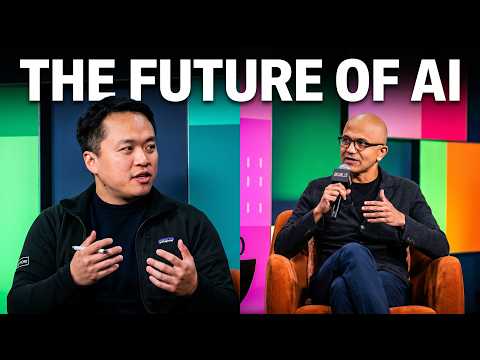
https://x.com/TheTuringPost/status/2061901518522188251?s=20 Satya Nadella joins swyx, Sarah Guo, and Elad Gil to discuss Microsoft’s AI announcements and argues the key shift is an ecosystem approach where any company can build “frontier intelligence” using models, tools, data, and a harness, not just consume one model. He outlines Microsoft’s MAI training strategy emphasizing clean data lineage, hill-climbing scaffolds, private evals as core IP, and multi-model harnesses with strong context layers. They cover value from coding agents driving new IDE/UI needs, long-running enterprise “autopil
agent, ai_frontier, ai_product, engineering, market, startup
14
Carina Hong, founder and CEO of Axiom Math, joins the AI for Science podcast right after closing a $200M Series A to argue that the road to superintelligence runs through formal verification — not as a bug fix, but as the only way to compound and scale AI brilliance. Her company, seven months old and 30 people strong, scored a perfect 120/120 on the 2024 Putnam exam, beating the best human and every other AI system at the time. We dig into the Lean theorem prover, why verified generation gives better training signal than informal RL, the hard specification problem, and why Carina believes an i
ai_frontier, ai_product, engineering, market, startup
07

Papers

01
它想解决的大模型推理里“思考太慢、无法在运行时控制”这两个痛点:普通的 chain‑of‑thought 能提升答案准确率,却会消耗大量 token,且用户只能被动接受整个思考过程。作者把推理过程抽象成马尔可夫决策过程,训练一个轻量控制器(agent)在每一步观察当前思考轨迹和剩余预算,主动下发“思考策略+引导短语”,引导冻结的主推理模型继续生成。控制器先用合成的多预算轨迹进行预训练,再用预算感知的强化学习微调,实现了在保持原有准确率的前提下大幅削减 token,并能在不同任务/模型间灵活调节效率‑精度平衡。对做 Agent、产品化 AI 推理系统的同学,这提供了一套可插拔、可控的推理调度方案,既省算力又让服务可实时调优。
cs.CL, cs.AI
02
它在同步口语翻译场景下,解决“解码器‑Only 大模型如何实现低延迟、精准的对齐翻译”这一痛点。方法是把 AlignAtt 思路移植到只解码的 LLM 上:在 Prompt 中显式标记源区间、离线挑选专用对齐头、对草稿‑源注意力块做快速 qk‑replay 并在运行时捕获 query/key,确保输出位相同。因为实现只依赖确定性 Prompt、校准的注意力头和 query/key 捕获,既能在 2‑4 秒超低时延下超越基线,又可复用到更强的解码器‑Only 翻译模型,直接对 Agent/AI 产品的实时多语言交互和低功耗部署有参考价值。
cs.CL, cs.AI
03
它要解决“Rubric‑based RL”里评价尺度质量被固定提问结构卡住的问题——开放式问法得到的评分标准太模糊,收紧又会造出模型根本验证不了的参考答案,导致训练失去奖励信号。作者提出 QUBRIC:先用教师提供的要点把开放式问题改写成可评估的情境问法,再用对比式生成让 rubric 直接反映教师和模型策略之间的差距,最后过滤掉不可学习的对/不配对,只保留信息量大的 query‑rubric 对进行 GRPO 训练。因为它在只用指令跟随数据的前提下就把 ArenaHard 提升 5.5 分,并在法律、伦理、叙事等三类全新基准上平均提升 6.3 分,说明该共设计思路能让 rubric‑based RL 在不可验证任务上真正落地,对你们构建更可靠、可解释的 Agent 评估体系很有参考价值。
cs.CL, cs.AI
04
作者们发现大语言推理模型在把内部不确定性转化为文字化的信心表达时经常失真,导致用户误以为模型思考得更稳健。为此他们提出了一个评估框架:从 token 概率、隐藏状态和多次采样一致性三方面抽取内部不确定度,再衡量模型输出的语言确定性,并用“前缀条件采样”统一不同推理链的结构差异。实验显示即使是强推理模型也难保证可信的置信度表达,现有评估方法甚至会给出相互矛盾的结果。对做 Agent、可信交互或高风险 AI 产品的工程师而言,这篇工作提供了量化模型自信可靠性的工具和警示,直接关系到系统的风险控制与用户信任。
cs.CL, cs.AI
05
Formalizing the Binding Problem
这篇论文聚焦“绑定问题”,即在多物体场景中,模型如何把属性(颜色、形状等)正确配对到对应的物体上。作者用信息论视角给出正式定义,并设计了 probing 测试,直接量化 Vision Transformer 各层(CLS token、空间 token 等)里保存的绑定信息,随后在特征共享、遮挡和自然图像等数据集上评估多种预训练 ViT。结果表明,绑定信息是视觉识别和推理性能的关键因素,帮助我们判断和提升模型在复杂场景下的鲁棒性,对做 Agent/AI 产品时的感知模块调优和故障排查特别有参考价值。
cs.CV, cs.AI, cs.LG, q-bio.NC
06
作者把 LLM 的“忘记-记住”痛点当作人类睡眠来模拟,解决模型只能在一次性推理或即时上下文里记忆、无法把短期经验迁移到长期参数的问题。做法是引入两阶段的 Sleep:先用 Knowledge Seeding(小模型知识向大模型上行蒸馏)把脆弱记忆稳固进大网络;再通过 Dreaming(RL 生成合成 curriculum)让模型自我练习、递归自我优化。值得关注的是,这套框架给持续学习、长时序任务和 few‑shot 泛化提供了“离线”强化学习的路径,直接对 Agent 系统的记忆管理和自适应升级有实用参考价值。
cs.LG, cs.AI
07
它把奖励模型里各类“规则校验、参考答案、流程清单、评分细则”等碎片化评估标准,统一包装成一个可调用的 Skill;把奖励计算视作一次结构化的 Agent 行动,Skill‑RM 能根据每个输入动态挑选、聚合对应证据,给出一致、可解释的分数。这样既省去手工拼接评估资源的工程负担,又在 best‑of‑N、RL fine‑tune 等下游任务上比传统 judge 更稳、效果更好,直接面向实际产品的评估管线提升了可维护性和性能。
cs.LG, cs.CL
08
该论文聚焦于“零样本人体全身动作追踪”难题:现有的 shallow MLP 追踪器因数据少、灵活性受限,难以同时兼顾高动态性和跨任务泛化。作者构建了 Humanoid‑GPT——一种基于因果注意力的 GPT‑style Transformer,先在 20 亿帧的统一动作库(整合公开 Mocap 数据+内部大规模录制)上进行大规模预训练,再直接用于零样本追踪。规模化的模型与数据让它在未见动作和控制任务上也能稳健追踪高动态、复杂动作,显著刷新了性能上限,值得关注因为它展示了大模型+海量运动数据在通用运动控制上的潜力,可为机器人、虚拟人、交互式 AI 等 Agent 场景提供即插即用的运动生成与追踪能力。
cs.RO, cs.AI, cs.CV