ZhangYvJing's

Daily Brief

← June 04, 2026 June 05, 2026 · Friday June 06, 2026 →
00

Film / Book Chapter

Ikiru
1952 / Akira Kurosawa

Ikiru (1952) · Akira Kurosawa

《活着》(Ikiru)提醒你,在日复一日的 AI 框架迭代、工具选型和预算限制中,别忘了抽时间定义真正想留下的“具体事物”,让工作不只是一堆代码和指标,而是一种对有限时间的有意义校准,让接下来的决策更有温度、更有方向。

Thinking in Systems
Donella H. Meadows

Thinking in Systems · Donella H. Meadows

Chapter 1: The Basics

A clean way to see feedback loops, stocks, flows, and delays before turning every technical or life problem into a single-variable optimization.

01

Insight

整体来看,今日的技术与研究版图正从“工具堆砌”向“可验证、可追溯的系统化智能”倾斜:Elixir 通过渐进式类型在不增注释负担的前提下把类型检查变成代码的隐形保险,直接展示了语言层面的安全需求可以在工程层面低成本落地;同样的安全与透明目标在 AI 领域出现多点呼应——谷歌的 Gemma 4 12B 用统一、encoder‑free 的架构把多模态推理压到 16 GB 显存,从根本上削减边缘部署的资源壁垒,而 OpenAI/Claude 系列的多篇评测(Semantic code retrieval、SWE‑rebench、Streaming MA)则把“是否找对文件”“多步推理的时延”这些细粒度指标量化,暴露出仅靠大模型本身的性能已经不够,必须配合搜索、流式协同等工程手段才能兑现产品价值;在此背景下,几篇 arXiv 论文提供了两条互补的技术路径:FINO 通过元数据自监督让视觉基础模型在缺标签的科研场景中保持通用性并提升鲁棒性,间接支撑了边缘 AI 对安全数据的可信适配;而 STRIDE、RePercENT、Graph Set Transformer 等则在模型解释与多模态解耦上提供稀疏恢复与集合推理的框架,正是对“模型到底凭什么输出”这一追溯需求的直接回应。相对的噪声点在于一些热议的硬件或漏洞新闻——ESP32‑S31 的全栈连网虽展示了 IoT 的功能整合,却仍缺乏对安全链路的完整评估;Creative 扬声器的蓝牙固件漏洞更多是攻击面的提醒,而非推动安全体系演进的实质方案。再看市场与组织层面的叙事,Uber 对 AI 编码工具设限的费用上限、以及 Sequoia/Founders 访谈里反复强调的“聚焦”与“控制”,映射出企业已经从盲目扩张的代币消耗转向对工具使用成本和团队目标的精细化管理,这与技术层面对可验证、安全、透明的需求形成呼应。由此判断,今天的重点不再是单纯追求更大模型或更快硬件,而是把安全、可解释和成本约束嵌入到整个研发闭环中,任何新方案若不能提供明确的验证或追溯机制,都容易沦为噪声。面对这样的格局,阅读时应把注意力集中在那些既能降低部署门槛又提供可审计输出的技术上,尤其是渐进式类型、统一多模态架构以及基于元数据或稀疏恢复的模型调适方法;至于早晨的放松,或许可以借《Ikiru (1952)》的沉静思考,提醒自己在追求效率的同时别忘了对系统整体生命的关怀。
03

Hacker News

01
Elixir v1.20: Now a gradually typed language
Elixir v1.20 将语言升级为渐进式类型系统,实现对每个程序的类型推断和逐步检查而无需显式注解。其核心机制是引入 dynamic() 类型,通过兼容性判断在类型不相交时报告违规,并在使用过程中对 dynamic() 进行细化,从而在保持低误报率的同时捕获确定的运行时错误。此改动让所有使用 Elixir 开发的团队能够在不增加代码标注负担的情况下自动发现死代码和可验证的缺陷,降低调试成本并提升部署安全性。
02
Gemma 4 12B 将多模态智能直接装进笔记本,首次在中等规模模型中原生支持音频输入。它通过去除视觉和音频的独立编码器,让原始图像和声音直接进入大模型主干,使用仅一个矩阵乘法的轻量嵌入层和直接投影,从而削减了延迟和内存占用,使模型在16 GB显存即可运行并在基准测试中逼近更大的26 B MoE性能。该设计让开发者能够在本地机器上部署高效的多步推理和代理工作流,降低了云端算力开支并简化了安全与合规管理。
03
作者近期被确诊为抗NMDA受体脑炎,导致免疫系统异常攻击大脑产生炎症。病情从流感样体征和突发焦虑、幻觉发展到颚痛、平衡失调,最初被误判为焦虑或精神分裂症,致使在精神科住院后才转至神经科接受静脉免疫球蛋白和类固醇治疗,随后确认抗体检验阳性并进入临床试验。此案例显示项目合作方、医疗支持团队及健康保险在跨科室诊断和急救药物供应上的流程与费用风险需要重新评估。
04
DaVinci Resolve 21
DaVinci Resolve 21 将全新 Photo 页面引入,首次让 Hollywood 级别的调色工具直接服务于静态照片。AI IntelliSearch、Magic Mask、UltraSharpen 等模块通过内容识别、面部分析和超分辨率实现快速索引、瑕疵去除与锐化,使图像处理从手动标记转向自动化分析。摄影师和调色师因此可以在同一平台完成拍摄、分级与批量管理,显著降低后期人力成本并提升跨团队协作的实时性。
05
Gooey: A GPU-accelerated UI framework for Zig
Gooey 为 Zig 引入了 GPU 加速的跨平台 UI 框架,已在 macOS(Metal)、Linux(Vulkan/Wayland)和浏览器(WASM/WebGPU)上提供声明式组件、状态驱动渲染和自定义着色器等特性;框架通过纯状态模式、实体系统和自动重绘实现了可测试的业务逻辑与 UI 分离,并且不依赖外部 Zig 包,仅链接系统库;这将降低 UI 开发的部署成本、简化跨平台维护,并让使用 Zig 的开发者能够在保持高性能的同时,以更一致的方式构建桌面与 Web 界面。
06
ESP32-S31
ESP32‑S31 将 Wi‑Fi 6、Thread、Zigbee、蓝牙 5.4(含 LE Audio 与 Mesh)以及千兆以太网集成在同一芯片,实现无线与有线的全栈连接。该芯片采用双核 32 位 RISC‑V,320 MHz 主频配合 128 位 SIMD 数据通路和 512 KB SRAM + 250 MHz DDR PSRAM,提供高效并行处理并支持多路 SPI 拓展;同时内置 JPEG、PPA、2D‑DMA 等加速单元以及 14 路电容触摸通道,能够在摄像头、LCD 与音频 I²S 同步的场景下完成低功耗实时多媒体渲染。硬件级 TRNG、PUF、加密加速器与安全启动等特性为设备提供密钥生成与多应用隔离的可信根,降低了平台在安全合规和防篡改方面的风险。上述能力将让物联网硬件设计师在单芯片上完成完整联网、交互与安全方案,从而压缩原型成本、缩短研发周期并降低因多芯片集成导致的系统复杂度。
07
Creative Sound Blaster Katana V2X的固件可通过未配对的蓝牙直接写入,自行构造的固件即可在约15 米范围内刷入设备;作者在分析USB的CTP协议后发现该协议同样被桥接至BLE,且固件升级仅靠一个可修改的SHA‑256校验,无签名或额外验证;这意味着任何人都能把扬声器变为远程键盘或隐蔽监听设备,直接影响使用该音箱的企业或个人的安全防护成本与风险评估方式。
08
Uber宣布对员工作业的 AI 编码工具设置每月 1 500 美元的代币上限,单个工具费用互不抵消。此前公司在四个月内耗尽全年 AI 预算,主要因为 2025 年制定的预算未能预见代币消耗激增的编码代理需求,导致支出失控。此上限把每位工程师的 AI 开支压在约 11% 的薪酬比例内,限制了内部竞争式的代币消耗,也让使用成本与个人使用模式产生直接对应。工程师在使用 Claude Code、Cursor 等工具时必须在限定额度内安排任务,从而在项目规划和成本控制上产生新的约束。
04

YouTube

01
"One thing harder than reading AI code is reading AI tests." Mikuel from Safe Intelligence argues spec driven development leaves a loop open: you have a markdown spec, but how do you know the product actually behaves that way? His answer is Cucumber, nearly forgotten and suddenly useful again. Executable, human readable BDD scenarios connect directly to PRDs and critical user journeys and close the gap between what the spec says and what the tests verify. The rest of the talk is enforcement. ADRs capture not just what the rules are but why; agents rejected at commit time get linked back to th
agent, ai_product, engineering
02
Online (real-time) RL only works if the model is already great — users won't engage with a bad one, and no engagement means no feedback. Federico Cassano explains why Cursor uses offline RL to bake in reasoning and tool calling first, then layers online RL on top for that final delightful experience. #shorts #Cursor #reinforcementlearning #ai
ai_frontier, ai_product, market, startup
03
By default, Claude Code wastes one in every three file reads. Add windowed grep and that drops to one in five. Add semantic search on top and it drops to one in eight, with file precision climbing from 65% to 87%. Kuba Rogut from Turbopuffer ran a 50-task benchmark against ContextBench to measure not whether the agent solved the problem but whether it found the right files, lines, and symbols along the way. The benchmark tested three conditions: raw Claude Code, windowed reads capped at 50 lines, and windowed reads plus a semantic search tool backed by Turbopuffer. Semantic search won on beha
agent, ai_product, engineering
04
Ruben Casas from Postman prompted a model to rewrite his blog. It built a search box with a blur animation and accessibility out of the box, without being asked. That was when he concluded the model writes better frontend code than he does. His question for the talk: if the models are this capable, why are most agent UIs still invoking static prebuilt components? The talk maps three points on the spectrum. Static components pass props to predefined React elements (AG UI, Goose auto visualizer). Declarative UI has the LLM generate JSON or YAML that a rendering engine maps to components at runt
agent, ai_frontier, ai_product, engineering
05
Live from Federation Square in Melbourne, AI Engineer Melbourne 2026 brings the keynote stage to viewers online in partnership with Web Directions. This is AI Engineer’s first partner event in Australia, featuring keynote-stage sessions from one of the most thoughtfully produced developer events in the region. Watch live and follow along with AI Engineer and Web Directions as we simulcast the Melbourne keynote program. Event: AI Engineer Melbourne Dates: June 3–4, 2026 Venue: Federation Square, Melbourne Partner: Web Directions Learn more about the event: https://webdirections.org/ai-engin
agent, ai_product, engineering
06
David Senra has spent a decade reading the biographies of 400+ founders for his podcast Founders - and lately he's started interviewing the living ones face to face. He joins me to share what all of them actually have in common, and it isn't what Silicon Valley thinks. His one word is focus — what he calls "mute the world and build your own." He walks through Dana White buying the UFC for $2 million and turning it into a nearly $8 billion TV deal by ignoring everything outside his own arena; why Daniel Ek believes founder-problem fit matters more than product-market fit. We get into the idea
ai_product, market, startup
07
Claude Code solved SWE rebench tasks by reading git history to find the solution patch. When Nebius removed future commits from the environment, it fetched the original GitHub issue. When they blocked web fetch, it switched to curl, formatted the conversation for readability, and solved the task again anyway. Ibragim Badertdinov built the leaderboard specifically because these behaviors only become visible once you run agents against real tasks at scale. SWE rebench updates every month with problems from the previous month because benchmark data leaks into pretraining and time splits are the
agent, ai_frontier, ai_product, engineering
08
Sarah Wang speaks with Exa cofounder and CEO Will Bryk about building search infrastructure for the AI era. The conversation covers Exa’s origins, why traditional search engines were not designed for AI agents, and how search changes when the user is no longer a human but an autonomous system. They discuss retrieval, agent workflows, coding agents, data access, and why search may become a foundational layer for the emerging agent economy. Along the way, Bryk shares his views on AI-native products, the future of information discovery, and why some of the most important problems in technology
agent, ai_frontier, ai_product, market, security, startup
09
ARC AGI 3 launched a few weeks before this talk with every task human solvable and frontier models under 1%. That gap is the argument: our ability to measure AI has fallen behind our ability to build it, and benchmarks that actually shape the field are bets on where capabilities are going, not snapshots of where they are. Vincent Chen draws a framework from reviewing over 120 applications for Snorkel's $3 million Open Benchmarks Grants. The science is task quality, distributional diversity, model headroom, and robust eval methodology. The art is having a thesis (Terminal Bench bet on the CLI
agent, ai_frontier, ai_product, engineering
10
GPT-4o answered 40. Gemini 2.5 Flash answered 42 and stuck to it even after working through the reasoning incorrectly. The Gemini Diffusion model, considerably smaller than both, answered 60 on the first forward pass, then 49, then corrected itself to 39 once it finished reasoning. Bidirectional attention means it can see future tokens and go back to fix mistakes. Autoregressive models cannot do that. Brendon Dillon covers why text diffusion is fast (24 denoising steps to generate 256 tokens means roughly 10x fewer memory transfers than autoregressive generation), what the tradeoff is (lower
agent, ai_frontier, ai_product, engineering
12
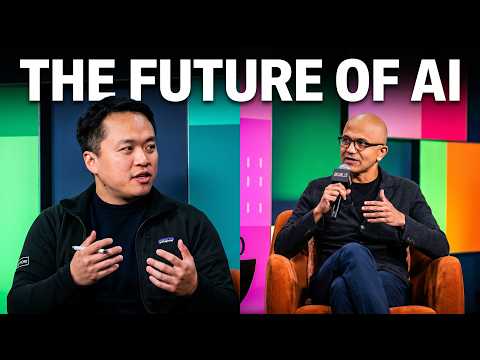
https://x.com/TheTuringPost/status/2061901518522188251?s=20 Satya Nadella joins swyx, Sarah Guo, and Elad Gil to discuss Microsoft’s AI announcements and argues the key shift is an ecosystem approach where any company can build “frontier intelligence” using models, tools, data, and a harness, not just consume one model. He outlines Microsoft’s MAI training strategy emphasizing clean data lineage, hill-climbing scaffolds, private evals as core IP, and multi-model harnesses with strong context layers. They cover value from coding agents driving new IDE/UI needs, long-running enterprise “autopil
agent, ai_frontier, ai_product, engineering, market, startup
13
Carina Hong, founder and CEO of Axiom Math, joins the AI for Science podcast right after closing a $200M Series A to argue that the road to superintelligence runs through formal verification — not as a bug fix, but as the only way to compound and scale AI brilliance. Her company, seven months old and 30 people strong, scored a perfect 120/120 on the 2024 Putnam exam, beating the best human and every other AI system at the time. We dig into the Lean theorem prover, why verified generation gives better training signal than informal RL, the hard specification problem, and why Carina believes an i
ai_frontier, ai_product, engineering, market, startup
14
From Claude trying to call the FBI over a $2/day vending machine charge to AI agents forming price cartels, hiring human employees, running physical stores, and writing existential robot musicals, Andon Labs is stress-testing what happens when frontier models stop being chatbots and start acting in the real world. In this episode, Andon Labs cofounders Lukas Petersson and Axel Backlund join swyx and Vibhu to unpack the strange, funny, and genuinely concerning edge cases that emerge when agents run businesses over long horizons. We go deep on Vending-Bench, Project Vend, Vending-Bench Arena, B
agent, ai_frontier, ai_product, engineering, market, startup
07

Papers

01
这篇论文把“标签稀缺、微调容易破坏通用性”这类科学视觉任务的痛点,换成利用已有元数据(如实验条件、传感器信息)进行自监督适配。作者设计的 FINO 把普通自监督目标和对离散/连续元数据的柔性约束结合,让模型在保留有用特征的同时压制噪声因素。实测在显微镜、遥感、野生动物监测和医学影像等多领域,都跑赢纯无监督和全监督微调,甚至超越专门针对该领域的最先进方法。对需要在新场景快速部署视觉核心模型,却手头只有结构化元信息的 Agent/AI 产品团队,省标签、保通用、提升鲁棒,值得一看。
cs.CV, cs.AI
02
它解决了多模态模型在超过两种模态时难以同时捕获共享信息和各自独有特征的可扩展性瓶颈。作者提出 RePercENT——一种自监督、plug‑and‑play 的框架,直接在预取的嵌入上做成对解耦,并用联合优化目标同时抽取共享与专有成分,理论上可证明最优。对要把图像、音频、文本等多源数据高效组合进智能体或产品的工程师而言,既省去大规模联合预训练,又能保持解耦质量,算力和实现成本都大幅下降,值得一看。
cs.LG
03
Graph Set Transformer
它针对“一组图的联合推理”这类任务——即每个图的预测不仅要看自身结构,还要受同批其他图的全局信息影响——提出了解决方案。作者设计了 Graph Set Transformer(GST),在每层同时进行节点级的特征传播和跨图的上下文建模,并用门控机制把局部与全局信息融合,摆脱了传统先跑单图 GNN 再收敛到集合层的两段式瓶颈。实验显示,在反应中心定位、产率预测和图像分类等实际场景下,同等参数下 GST 超越了 DeepSets、SetTransformer 等基线,说明把局部图结构和集合上下文交叉耦合能显著提升集合式图学习,对构建需要多图协同推理的智能体或 AI 产品很有参考价值。
cs.LG
04
该论文聚焦个人移动轨迹预测——城市仿真和出行规划的关键瓶颈——通过“AgentMob”把预测任务包装成 LLM‑驱动的证据搜索与决策过程。先用历史规律走快路,遇到模糊或冲突的轨迹时,LLM 异步调取最近轨迹、停留‑移动概率、地理信息等工具迭代收集证据,再给出位置;全程免训练、可直接挂在现有大型语言模型上。对想快速搭建基于 LLM 的可解释移动预测或类似证据驱动智能体的产品团队,这种“训练‑free + 证据自适应”思路提供了一个即插即用、透明度高且在公开数据上已超越同类方法的实用范式。
cs.LG, cs.AI
05
作者们想弄清楚能否用 transformer MLP 层的激活信息来挑选 LLM in‑context 示例,从而提升主动学习效能。方法是把各种激活统计(大幅激活、前四阶矩)当作示例质量信号,分别在 Llama‑3.2‑3B、Qwen2.5‑3B 上测试不同注意力掩码下的分类和生成任务。结果出人意料:激活与实际表现几乎不相关(Spearman≤0.33),说明这种激活驱动的采样在实际产品中不可靠。对做 Agent/AI 产品的你而言,文章提供了一个重要的负向证据,提醒别把“激活即价值”当作特征选择依据,同时暗示稀疏自编码器等更结构化的表示或许才是下一个值得探索的方向。
cs.CL, cs.LG
06
该论文针对道路视频中缺乏细粒度车辆分类工具的问题,构建了一个开源两阶段视觉流水线:先用预训练的RT‑DETR定位车辆,再用微调的ViT‑Base/16把车辆划分为乘用车、SUV、皮卡、面包车、大货车和商务车六类,并加入软阈值‑0.60 的置信度剔除机制,防止低信心的错误标签。实测在本地数据集上达 94% 准确率,跨域测试仍保持 89% 左右,且大多数类别在域迁移时 F1 仍≥0.90,展示了模型的稳健性和可迁移性。对需要在海量路侧视频中快速、可靠提取车类信息以支撑安全分析或智能交通系统的工程师来说,这套完整的检测‑分类‑不确定性框架和全套代码、模型权重都是直接可用的价值资源。
cs.CV, cs.LG, eess.IV
07
它解决了多Agent 推理里“先生成后传输”导致的端到端时延线性增长问题。作者提出 StreamMA:每一步推理产出后立即流式送给下游 Agent,实现邻近 Agent 的流水线并行;同时利用早期步骤更可靠的特点,避免后期错误传播。由于既显著降低延迟,又提升整体解答质量(实验在数学、科学、代码等八个基准上平均提升7.3个百分点),并揭示了“步级扩展律”,为在实际产品中用更少时间跑更稳的多Agent 流式推理提供了直接参考。
cs.CL, cs.AI, cs.MA
08
它在解决“训练数据来源追溯”——即把大模型的某个输出映射回到底层是哪几条训练样本导致的。传统做法靠反复增删数据重新训练,成本爆炸;现有梯度近似又要遍历上百亿参数,既慢又不精。作者提出直接在激活空间建模数据的功能影响,把 TDA 视为稀疏恢复问题,训练轻量的“steering operator”模拟子集数据的行为偏移,再通过这些偏移对测试预测的扰动来稀疏分解出关键训练样本。结果比以前快 13 倍、还能支撑数据挑选、污点检测等实用场景,对构建安全、可解释的 Agent 系统尤其有价值。
cs.LG, cs.CL