01
ZhangYvJing's
Daily Brief
00
Film / Book Chapter
Perfect Days
Perfect Days (2023) · Wim Wenders
今天适合看《Perfect Days》,因为它更像一次生活和判断方式的校准,能把注意力从持续输入里稍微抽出来,重新放回你真正想怎样生活和做事上。
The Staff Engineer's Path
The Staff Engineer's Path · Tanya Reilly
Chapter 2: Three Maps
Good for calibrating work beyond code: where influence actually travels, which systems matter, and how to avoid mistaking activity for leverage.
01
Insight
今天的输入更像几股不同语气的材料同时挤在一起:社区链接在暴露工程和产品环境里的真实焦点,长视频在把这些焦点放回更完整的语境里,研究材料则提醒人热度和可落地性并不总是同一件事。如果先不急着做结论,至少可以把这几条线索放在一起看:Hacker News 的 Prefer Strict Tables in SQLite;Hacker News 的 How to Hide from Killer Drones;Hacker News 的 We scaled PgBouncer to 4x throughput;Hacker News 的 Who manages the agents?;Hacker News 的 Modern decor may be straining people's brains;Hacker News 的 Nvidia, CoreWeave, and Nebius: Inside the Circular Financing of the GPU Boom。真正值得注意的不是单条内容本身,而是它们共同指向了什么、彼此漏掉了什么。
03
Hacker News
02
03
PgBouncer 通过在同一端口启用 soreuseport 并让多个进程相互 peering,跑满了 16‑核机器,实现了约 4 倍的事务吞吐提升。单进程只能占用一核,负载增长时会因 CPU 成为瓶颈而吞吐下降,而进程组利用内核分发新连接的机制,使查询取消请求在错误进程上仍能转发到持有会话的进程,保持功能完整;同时把 maxclientconn 与 maxdbconnections 按进程数平分,防止对 PostgreSQL 产生超额压力。这种多进程池化方案直接影响使用 PgBouncer 的数据库运维和应用开发团队,让他们在高并发场景下无需额外扩容即可提升资源利用率并降低因池化瓶颈导致的性能风险。
04
05
06
07
08
09
10
04
YouTube
01

Conventional wisdom says continuous disagreement is an anti-pattern. Kalshi's co-CEOs made always taking the opposite side a system — the balance a company walking the regulatory tightrope needs.
02

03

"How much better do the models have to get before you'll stop reading the code?" Theo asked that question recently and the replies caught fire. Mitchell Hashimoto is calling it agent psychosis. ThePrimeagen's subreddit is in open revolt about people shipping code they never read. Uncle Bob says we have about a year left of looking at code at all. Alex Volkov saw this argument coming three months ago, and gave it a name. At AI Engineer Europe, OpenAI's Ryan Lopopolo opened the conference by saying "code is free." His team shipped over 1,000,000 lines with zero human review. Mario Zechner clos
04

Full episode: https://www.youtube.com/watch?v=OS1NZLgKM2c Me on twitter: https://x.com/dwarkesh_sp
05

06

If you build agents alone long enough, you will independently reinvent five things software engineering solved decades ago. A way to test whether your agent's output is still correct after you changed something. A way to run it on a schedule and know if it failed. A way to prevent one skill's schema change from silently breaking three downstream skills. A way to roll back when today's run produces garbage. A way to validate outputs before they hit production. You just reinvented regression testing, cron monitoring, contract testing, version control, and staging. Badly. Without realizing it. T
07

Local AI has crossed from interesting to useful, driven by stronger open models, better hardware, and a maturing ecosystem for running intelligence outside the cloud. This panel explores what that shift unlocks for sovereignty, defense, regulated industries, privacy, cost, and resilience, and why open-source AI may be central to who benefits from the next wave of intelligence. Moderator: Nader Khalil (NVIDIA). Panelists: Joseph Nelson (Roboflow), Alex Cheema (Exo Labs), Ahmad Osman (r/LocalLLaMA).
08

Most vertical SaaS teams are doing the same things: chasing higher accuracy, building better model harnesses, shipping more features. And their customers are saying the same things: the AI got this wrong, it hallucinated, the accuracy is not good enough. So teams go back and push the numbers higher. We did the same at Filed. We built AI data entry for tax firms and hit 80%+ accuracy against an industry baseline of 50-60%. Many users still complained. Same model, same stack, different outcomes. So we dug in. The unhappy customers were not experiencing worse AI. They were reverse-engineering eve
09

10

Most AI demos are built around a toy workflow. Ira was built around a factory. This talk is the story of how a third-generation Indian machinery company built a multi-agent operating system that helps run sales, business development, recruitment, quoting, marketing, production context, email workflows, and organizational memory. Ira is not a chatbot and not a wrapper around a single framework. It is a company brain: 39 bounded specialist agents, Athena as orchestrator, a 17-stage request pipeline, Qdrant for document memory, Neo4j for relationships, Mem0 for long-term semantic memory, Postgre
11
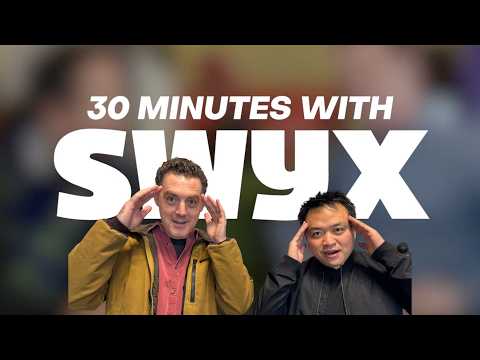
chatting with our friend Matt!
12

a trip into the cognitive science inspired research of Amazon's new AGI Lab!
07
Papers
01
02
该论文指出,仅用精度或困惑度评估量化后大语言模型会忽略其行为变化,提出“correctness agreement”度量——比较原模型与量化模型在正确预测上的重合度,独立于整体准确率。通过对 8‑bit 到 2‑bit 多种量化方案的层级统计分析,发现即使任务分数保持不变,注意力权重的结构会产生显著偏移,尤其是 query/key 投影更敏感,出现非线性断点。对工程师而言,这提醒在资源受限部署时必须做行为层面的验证,而非只看传统指标,避免误以为量化模型等价于原始模型。
03
04
05
06
07
08
08
Issue Monitor
Ready now—Actionable issues
Needs review—Awaiting a fresh check
Data statusCheck statusLive status unavailable