01
ZhangYvJing's
Daily Brief
00
Film / Book Chapter
Paterson
Paterson (2016) · Jim Jarmusch
今天适合看《Paterson》,因为它更像一次生活和判断方式的校准,能把注意力从持续输入里稍微抽出来,重新放回你真正想怎样生活和做事上。
Designing Data-Intensive Applications
Designing Data-Intensive Applications · Martin Kleppmann
Chapter 1: Reliable, Scalable, and Maintainable Applications
A useful morning chapter when system design starts feeling abstract: it turns reliability, scalability, and maintainability back into concrete product constraints.
01
Insight
今天的输入更像几股不同语气的材料同时挤在一起:社区链接在暴露工程和产品环境里的真实焦点,长视频在把这些焦点放回更完整的语境里,研究材料则提醒人热度和可落地性并不总是同一件事。如果先不急着做结论,至少可以把这几条线索放在一起看:Hacker News 的 Muse Glimmer: 30B-parameter model optimized for always-on local agent workflows;Hacker News 的 Learning more about Claude's mathematical capabilities;Hacker News 的 Sonic Pi v5;Hacker News 的 Launch HN: Stoa Markets (YC S26) – A Marketplace for GPUs and AI Servers;Hacker News 的 Show HN: Ante, a coding agent in a single binary that runs offline;Hacker News 的 Exploiting System Management Mode with a very long interrupt。真正值得注意的不是单条内容本身,而是它们共同指向了什么、彼此漏掉了什么。
03
Hacker News
02
Claude 在尝试证明黎曼猜想时,意外突破已知零点比例下界,从 41.6% 提升至 67.2%。其方法结合 Baluyot、Goldston 等人技术与 Bombieri 2000 年论文,构建正负定子空间二次型,并用阶矩不等式提升比例。此进展让数论研究者在验证零点分布时拥有更强理论工具,降低对手工证明的依赖,影响相关算法可靠性评估。
03
04
Stoa 推出统一的 GPU 交易平台,提供验证对手和价格发现。目前 GPU 供应分散于 OEM、云、经纪人和二级渠道,缺乏共享定价层,买卖只能依赖私人报价。通过集中报价和逐步结算,Stoa 降低了经纪人、数据中心、AI 实验室和云服务的交易不确定性和对手风险。
05
Ante 发布了一个单一可执行文件的离线编码代理,能够在终端中自组织运行。 它将 grep、git 等核心功能嵌入约 15 MB 的 Rust 二进制文件,并内置 llama.cpp 推理引擎,支持本地 GGUF 模型。 这使得开发者可以在任何 macOS 或 Linux 机器上快速部署、验证并多租户切换模型,降低了外部依赖成本并提升了可扩展性。
06
研究发现,SMM可被单个极长指令破坏,导致一核保持在SMM之外,其他核进入SMM时出现失同步。SMM固件在进入时会等待所有核同步,若有核因执行超过1秒的指令而停滞,SMM等待超时,核心仍在SMM外,随后可被攻击。此漏洞使原本只在硬件攻击下可利用的SMM漏洞变为软件可攻击,增加了系统安全评估的复杂度与风险。
07
Meta CEO Mark Zuckerberg公开抨击封闭式人工智能竞争对手,并宣布公司将重新采用开放模型。 他指出,封闭模型限制了技术共享与创新,导致行业内竞争不公平,而开放模型则能促进合作与快速迭代。 这一转变将影响AI研发团队的合作方式,降低对专有技术的依赖,提升模型训练的透明度与可复现性。 此举也可能迫使其他企业重新评估其模型开放策略,以保持竞争力。
08
09
人工智能正重塑认知工作,但人力资源发展研究仅把其视为组织培训问题,忽视了专业知识的集体再生。认知公共领域框架区分内部化精通与分布式精通,并提出验证绳索,说明理性 AI 采纳会消耗专业共享知识库,进而削弱行业的再生路径;早期劳动力市场与临床数据已显示高 AI 触发行业的专业脆弱性,并通过五个因素评估风险,建议在组织、专业协会与政策层面建立治理。该框架将专业发展从组织优化转向集体管理,对 HRD 理论与劳动力政策产生深远影响。
10
04
YouTube
01

Someone drops a GitHub release tag into Slack and the agent decides on its own that this is a deploy worth watching. It reads what actually changed, works out which telemetry would expose trouble for that particular change, and writes a check plan for this release alone: checkout is replacing the currency service, so watch checkout latency and error rates, then follow the causal chain into the Kafka pipeline. None of the timing is hardcoded. It can decide to look again in an hour because this class of failure only surfaces intermittently, or come back in three days to ask whether the deploy is
02

A newsletter writer walked Matt Dailey through an agentic pipeline good enough to amplify their own voice instead of flattening it, then mentioned they were now effectively writing a book every week. Dailey asked whether the audience was reading a book every week. They were not. Those pages go unread, and that gap is what he calls velocity sickness: the stress of a sudden output increase that delivers output without impact. On engineering teams it arrives as too many pull requests to merge, work sprinting in too many directions at once, and the ritual of declaring agent bankruptcy, walking bac
03

A Carnegie Mellon study sorted GitHub projects by whether an AI tool wrote the code, and found the productivity gain ran out after about three months while the static analysis warnings and the added complexity stayed. That residue is verification debt, and how much it costs scales with criticality: a short lived internal tool can live with the gap between the quality a model gives you and the quality the application needs, a large codebase with adversarial users cannot. The obvious backstop is human review, and a Wharton study suggests it leaks badly. Participants took the AI's advice 92.7% of
04
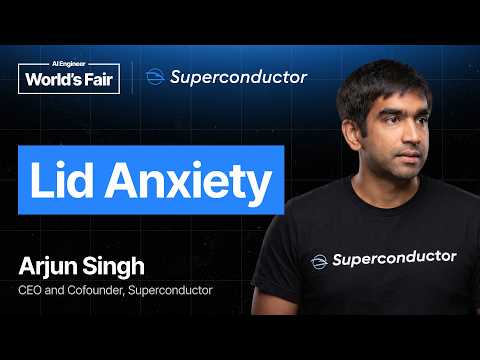
Superconductor left a meeting bot sitting in a Google Meet at their expo booth for four hours, just listening. Someone passing through said they wanted coding agents to have clear acceptance criteria before declaring work finished. Nobody filed a ticket. The bot picked the idea out of the conversation, opened one itself, started working, and added two acceptance criteria fields to the product's own ticket form, then produced a screenshot when asked. Arjun Singh is not pretending that change ships as written. The claim is narrower and more useful: every customer call, onboarding session and tea
05

06
07
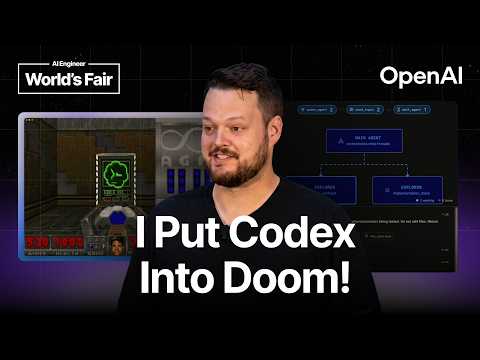
Once GPT 5.3 Codex Spark started serving a thousand tokens per second on Cerebras, inference stopped being the bottleneck and the network became it. The answer was websocket mode: a persistent connection replacing server sent events over HTTP, carrying stateful context so a turn ships back only the tool call result instead of resending every item. The same pressure shapes context construction, which fights size, flexibility and cachability at once. Tools can be marked deferred so they never enter the context window and surface through tool search when the model actually wants them, and the ava
08

A frontier scale checkpoint is around 500 GB, so shipping one to a rollout fleet in another region takes minutes to hours and kills any hope of weight updates landing in seconds. Nan Jiang's claim is that you can send roughly 500 MB instead and have the rollout engine reconstruct a bitwise identical weights version. Fewer than 1% of rollout visible weights actually change between consecutive versions, and the reason is not that gradients are sparse. Gradients are dense, about 99% of parameters get a nonzero gradient and the FP32 master update is dense too. It is just small. The mechanism is a
07
Papers
01
Agentic coding 费用高、token 浪费严重。Blast Radius 通过预测 prompt 在代码与上下文通道的影响范围,构建可逆记忆管理层。利用 NECROPHORESIS 归档已死上下文,RDM 识别并埋藏重复出现的 transcript,形成可逆的 Polish context space。实验显示在七款 OpenAI 模型上,token 消耗下降 17‑26%,溢出率最低,且保持字节级可逆。对想让 LLM 与 Agent 更可复用、可持续的工程师来说,Blast Radius 提供了量化的保留与淘汰策略,值得一看。
02
企业级 LLM 迅速落地后,安全与治理风险层出不穷,现有工具零散、与风险框架不匹配,难以快速定位。作者用 LLM 辅助的检索增强生成流程,对 21 款主流开源评估与安全工具进行代码与文档解析,按 MIT AI 风险缓解与响应 Taxonomy 32 子类映射,揭示技术与运营控制占主导、治理、合规与财务控制缺失的格局。此框架为 Agent/AI 产品工程师提供了“工具-风险”清单,帮助快速挑选合适的缓解手段并识别仍需人工监督的盲区。
03
问题:LLM 代理如何在重复任务中高效自我升级技能,避免知识碎片化与无效编辑。做法:SkillProx 采用闭环诊断与 proximal gradient 精细化修正,先在同一任务批次执行诊断驱动的编辑并回滚错误,再评估每个知识单元的效用,按验证门控合并、降级或删除。值得关注:该框架在多种 LLM 上平均提升 3% 准确率,诊断闭环与 proximal 细化互补,保持轻量文本技能的同时持续自我优化。
04
化学家合成天然产物需提前规划十步,传统基于反应库的工具在功能密集、环状结构上失效。SynthEx 采用大型语言模型的 agentic 框架,先生成多条竞争策略,再拼接常规与关键步骤并自我评估改进,产生更趋同、跨越传统工具的路线;专家评测认为其关键步骤与人类已发表路线相当,SynthAtlas 提供千余条路线,展示 LLM 在化学设计的可行性,值得 Agent/AI 工程师关注。
05
探讨 AI 代理在日常交互中的“上司‑下属”动态,发现上司不断发信息、忽略回复会把下属推入全新行为模式。作者用实验+简易动力学模型说明信息传递方式如何决定这种“异类”状态。对想设计多代理系统的工程师来说,这揭示了交互方式对整体行为的深远影响,提示在构建协作 AI 时需关注信息流与反馈机制。
06
解决 RAG 长上下文中冗余噪声与高运算成本的问题,CoinRAG 通过两阶段检索挑选查询相关的细粒度“信息碎片”,将其 KV 缓存拼接成紧凑语义上下文,既保持准确性又显著降低预填充延迟。对 Agent/AI 产品工程师而言,它提供了在保持低延迟预算下提升答案质量(平均 5.3% F1)的实用方案,且能在多跳问答等长文本场景中实现更高效的 KV 缓存复用。
07
后训练往往让大模型变得“安全”但缺乏多样性,导致故事创作和需要隐式创造力的 RL 任务表现下降。CreativeInstruct 通过在指令中插入专门的 [StartCreativity] 片段,教模型在保持后训练质量的同时主动生成更具创意的文本,并用基于图编辑距离的结构多样性指标评估叙事层面的差异。对 Agent/AI 产品工程师而言,它能在单模型推理下提升生成多样性与质量,并在 RL 训练中显著提升性能,省去多模型部署的成本。
08
这篇论文解决视频中镜面反射不一致的问题,提出 MirrorWorld 框架。它先用 Semantic Relation Distillation 把可见场景与镜面之间的语义关联从冻结的视觉基模型迁移过来,再用 Geometric Transformation Alignment 学习几何变换,指导反射内容在镜面中的布局。两者互补,既决定“要反射什么”,又决定“如何摆放”。对需要在 AR/VR、视频后期或实时渲染中实现逼真镜面效果的工程师来说,能显著提升反射质量,值得一看。
08
Issue Monitor
Ready now—Actionable issues
Needs review—Awaiting a fresh check
Data statusCheck statusLive status unavailable