ZhangYvJing's

Daily Brief

← August 11, 2026 August 12, 2026 · Wednesday August 13, 2026 →
00

Film / Book Chapter

Still Walking
2008 / Hirokazu Kore-eda

Still Walking (2008) · Hirokazu Kore-eda

今天适合看《Still Walking》,因为它更像一次生活和判断方式的校准,能把注意力从持续输入里稍微抽出来,重新放回你真正想怎样生活和做事上。

The Staff Engineer's Path
Tanya Reilly

The Staff Engineer's Path · Tanya Reilly

Chapter 2: Three Maps

Good for calibrating work beyond code: where influence actually travels, which systems matter, and how to avoid mistaking activity for leverage.
01

Insight

今天的输入更像几股不同语气的材料同时挤在一起:社区链接在暴露工程和产品环境里的真实焦点,长视频在把这些焦点放回更完整的语境里,研究材料则提醒人热度和可落地性并不总是同一件事。如果先不急着做结论,至少可以把这几条线索放在一起看:Hacker News 的 Apple Silicon and macOS VMs: 11–16× Faster LLM Inference with Llama.cpp;Hacker News 的 OpenSSH 10.5/10.5p1;Hacker News 的 Stealing Reasoning Traces from Proprietary LLM APIs;Hacker News 的 Mojo 1.0;Hacker News 的 How We Used To Get Jobs: A Newspaper Classifieds Story;Hacker News 的 Show HN: iPhone app takes simultaneous images from 2 lenses, fuses into 1 photo。真正值得注意的不是单条内容本身,而是它们共同指向了什么、彼此漏掉了什么。
03

Hacker News

01
在 macOS 虚拟机中通过修改 Metal 能力查询,llama.cpp 的推理速度提升 11–16 倍。 虚拟机的 GPU 设备报告的能力低于实际,导致 llama.cpp 选用旧的 Metal 内核;通过在单个进程中插入兼容层,返回更高的 Apple family 和线程组内存,使其能使用新内核。 这使
02
OpenSSH 10.5/10.5p1
OpenSSH 10.5 版已发布,包含多项安全修复并将改为更频繁的补丁发布。此举源于大量 AI 辅助漏洞报告,团队发现 AI 发现的缺陷往往能被对手复制,且许多报告在真实威胁模型下仍具影响力。因而,系统管理员将更快获得修复,降低因未及时补丁导致的远程代理滥用、密钥泄露和会话劫持风险。
03
研究人员发现,专有大型语言模型的加密推理轨迹可以被恢复为明文。攻击者利用模型返回的加密链式思考块,在较弱的同类模型中重放并越狱,从而在不直接攻击强模型的情况下提取其隐藏推理。此方法暴露了 API 会话中隐藏的敏感信息,迫使使用者重新评估模型输出的安全性与隐私保护措施。
04
Mojo 1.0
Mojo语言正式发布1.0版本,成为可直接用于生产的稳定基础。此前频繁的语言更新导致社区难以维护长期项目,因此开发团队将稳定性作为1.0的核心目标,并通过社区贡献的超千次合并请求和数十万行代码的改进实现了这一里程碑。现在开发者可以依赖向后兼容的渐进式变更进行长期开发,降低因破坏性更新导致的成本和风险。
06
一款 iPhone 相机应用实现双镜头同步拍摄并合成单张高分辨率照片。它通过同时捕捉主镜头与变焦镜头的图像,利用机器学习实现对齐与色彩匹配,保留每个像素的真实光学细节,完全不使用生成式 AI。此功能让 iPhone 用户在不升级设备的情况下获得更广视角与更细节的照片,改变现场活动与日常拍摄的工作流程,提升后期裁剪与编辑的灵活性。
07
英格兰正走在成为首批消除丙型肝炎国家之一的道路上。已达成80%治疗目标、死亡率下降36%,并通过急诊血检、全科医生登记检测和免费居家检测等多渠道发现并治疗95%以上病例。此成就将迫使医疗体系持续开展筛查、治疗与随访,尤其针对高危成人群体,并可能影响血液安全与公共卫生资金分配规则。
09
Manus 将恢复独立运营,重新成为独立公司。为满足特定司法管辖区的监管要求,2025年12月29日后产生的数据将在2026年8月23日至24日被删除,受影响用户须在此期间备份并于8月25日恢复。此举将导致受影响用户在两天内无法访问账户,需提前备份以防数据丢失,未受影响用户可照常使用。
04

YouTube

02
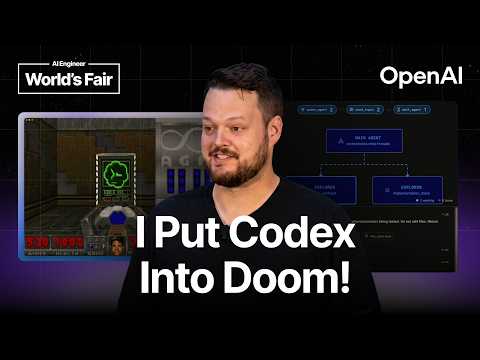
Once GPT 5.3 Codex Spark started serving a thousand tokens per second on Cerebras, inference stopped being the bottleneck and the network became it. The answer was websocket mode: a persistent connection replacing server sent events over HTTP, carrying stateful context so a turn ships back only the tool call result instead of resending every item. The same pressure shapes context construction, which fights size, flexibility and cachability at once. Tools can be marked deferred so they never enter the context window and surface through tool search when the model actually wants them, and the ava
agent, ai_frontier, ai_product, engineering, security
03
A frontier scale checkpoint is around 500 GB, so shipping one to a rollout fleet in another region takes minutes to hours and kills any hope of weight updates landing in seconds. Nan Jiang's claim is that you can send roughly 500 MB instead and have the rollout engine reconstruct a bitwise identical weights version. Fewer than 1% of rollout visible weights actually change between consecutive versions, and the reason is not that gradients are sparse. Gradients are dense, about 99% of parameters get a nonzero gradient and the FP32 master update is dense too. It is just small. The mechanism is a
agent, ai_frontier, ai_product, engineering
04
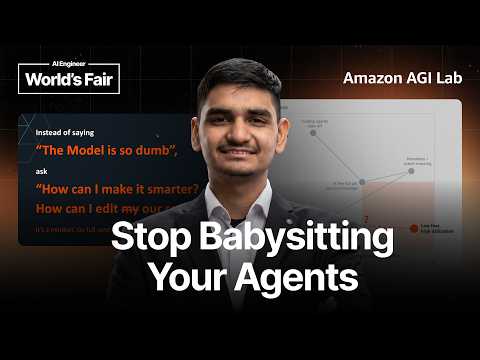
Leave agent adoption to individuals and the engineer shipping two PRs a day ends up reviewing the ten that the early adopter ships. They fall further behind, the code they are reading is worse, and they conclude the agents are the problem. Aditya Khandelwal's argument, from leading a team of ten through this, is that adoption is therefore a leadership problem and not an IC one, because the changes that actually work, restructuring a codebase for progressive disclosure and converging on a shared setup, are not changes one engineer can make alone. The symptoms of a bad setup are specific. Engin
agent, ai_product, engineering
05
Sequoia Capital partner Sonya Huang opens our Own Your Intelligence event with the case for why more companies are choosing to own their intelligence, down to the weights. She lays out the four forces driving the shift: cost, speed, performance, and controlling your own destiny, and explains why the race for the application layer is becoming the race for the intelligence layer itself. Sonya shares an opinionated framework for deciding what to own vs. rent when assembling your AI stack, and another for how to get going from zero to one. With today's open-weight models near the frontier, she ar
ai_frontier, ai_product, market, startup
06
How does an application company compete with frontier labs that have more money, talent, compute, and data? At Sequoia Capital’s Own Your Intelligence event, Harvey co-founder and president Gabe Pereyra shares the playbook: leverage the frontier ecosystem instead of building everything yourself. Gabe walks through how Harvey built its research lab, starting with benchmarks like LegalAgentBench and its open-sourced diligence dataset, using domain experts to guide synthetic data generation, partnering with multiple neolabs for post-training, and building the serving and evaluation infrastructur
agent, ai_frontier, ai_product, market, startup
07
a16z's Joel De La Garza is joined by Emilio Escobar, Chief Information Security Officer at Datadog, to discuss what it takes to secure a company where nearly every employee is using AI and more than 4,000 engineers are working with coding agents. Rather than trying to block new tools, Emilio explains why Datadog chose to embrace AI early and build the security infrastructure needed to use it safely. They unpack how AI changes traditional assumptions around data permissions, credentials, developer access, and software supply chains. Emilio shares how Datadog uses role-based MCP servers and eph
agent, ai_frontier, ai_product, market, security, startup
08
Sonnet 4.5 developed what Anthropic's Applied AI team came to call context anxiety: approaching its context window limit, it would wrap work up early and stop with room to spare. They built context resets into the harness to compensate. Then Opus 4.5 shipped without the behavior, and the fix turned into pure overhead, adding latency and discarding cache it should have kept. That is the principle Gagan Bhat and Isabella Kai He build the whole session on: a harness encodes assumptions about what the model cannot do on its own, and those assumptions go stale as models improve. The architectural
agent, ai_frontier, ai_product, engineering
07

Papers

01
ArchAgent v2 解决多级数据预取器设计的规模化难题:搜索空间庞大、硬件预算紧张、仿真耗时长。它采用级联进化搜索,先演化单级预取器再冻结,逐层扩展;同时加入硬件可实现性反馈,实时估算尺寸并反馈给进化过程。实验表明,自动生成的三层预取器在 DPC4 赛题中超越手工设计冠军,IPC 提升 3.8%,低带宽单核更显著。对 Agent/AI 产品工程师而言,这展示了自动化进化能在硬件设计中产出更优方案,并提供了进化探索的可视化洞察。
02
SHE 解决 LLM Agent 安全护具(harness)僵化、责任不清的问题。它把 System Prompt、Rule Bank、Safety Memory、Tool Policy 四个模块拆分,利用 Agent 运行轨迹中的失败案例做归因,按模块学习安全边界并通过安全‑效用验证挑选改进后的护具。实验显示,SHE 能把 Agent‑SafetyBench 的 ASR 降低 3.1 倍,同时保持甚至提升正常功能,且对新风险和不同模型都有良好迁移。对想让 Agent 在不断变化的威胁下保持安全且高效的工程师来说,值得一看。
03
本文探讨如何在大语言模型中平衡思考模式与非思考模式的训练,针对数学推理构建多比例、多时序的基准,系统评估数据比例与训练时序对思考准确率的影响。实验揭示两模式存在负向耦合,最佳时序随比例变化,提供可直接用于工程化训练的实用指南,适合关注 Agent/AI 产品的工程师快速把握。
04
论文指出在无验证器的测试时刻缩放(VF‑TTS)里,单靠置信度排序会因“早期高置信”导致复杂任务错误。 他们提出“consilience”框架,利用组合度量惩罚起始高置信、强制最终高置信,促使模型先探索后收敛。 该方法几乎无额外开销、对模型和任务高度通用,实验在数学题和代码生成上均优于基线,值得工程师快速验证。
05
DSLE把《Dark Souls》22场Boss战包装成Gym接口,给RL提供高维视觉、稀疏奖励、实时动作的真实测试场。作者用DSLE‑5(5场代表性Boss)评测随机、专家、进化、PPO、DQN,发现现有方法几乎无法通关,暴露了RL在复杂战斗中的瓶颈。对想打造稳健Agent的工程师来说,DSLE是检验算法鲁棒性、对抗性与学习效率的极佳基准。
06
政府部门正把 LLM 投进日常工作,却缺少既符合公共价值又适配荷兰语的评估工具。作者与荷兰市政专家合作,推出“Grip on LLMs”框架:定义事实性、诚实度、社会偏见、能耗、成本、训练数据透明度六大维度,并基准 30+ 多语种与荷兰专属模型,结果显示单一模型无法兼顾所有维度,质量提升往往伴随更高能耗与费用;事实性与诚实度并非同一属性。该框架及公开模型概览为工程师与决策者提供直观、可操作的选型依据,值得 Agent/AI 产品工程师快速了解。
07
MLLMs 视觉理解强,但内部特征难以审计与控制。MMDiff 通过训练多模态稀疏自编码器(SAE),对比基线 LM 与多模态适配版本,精准定位被训练改变的特征;再用每词对比激活识别任务因果特征,并可通过因果移除或引导实现特征级控制。对 LLaVA‑MORE、PaliGemma 2、InternVL3.5 评测显示,移除特征可显著削弱空间与 OCR 任务,降低攻击成功率;引导则提升准确率。对 Agent/AI 产品工程而言,它提供可解释、可调节的“特征开关”,既能提升安全性,又能针对性优化性能。
08
本文指出现有自动 TTS 评估(MOS 预测器、Audio‑LLM 判别器)往往只关注声学质量,忽略了听众真正感知的语言层面。作者把“自然度”拆解为 10 个语言维度,构建 860 条标注样本的元评估基准,并对 4 个 MOS 预测器和 4 个 Audio‑LLM 进行对比。结果显示两类评估器都无法全面捕捉语言错误,公开的数据集和标注方案为更精准、可解释的 TTS 评测提供了工具,值得从事 Agent/AI 产品工程的你关注。